
By Chef Samantha Tilley, executive chef at The Market CT and former chef-owner of Mockingbird Kitchen & Bar.
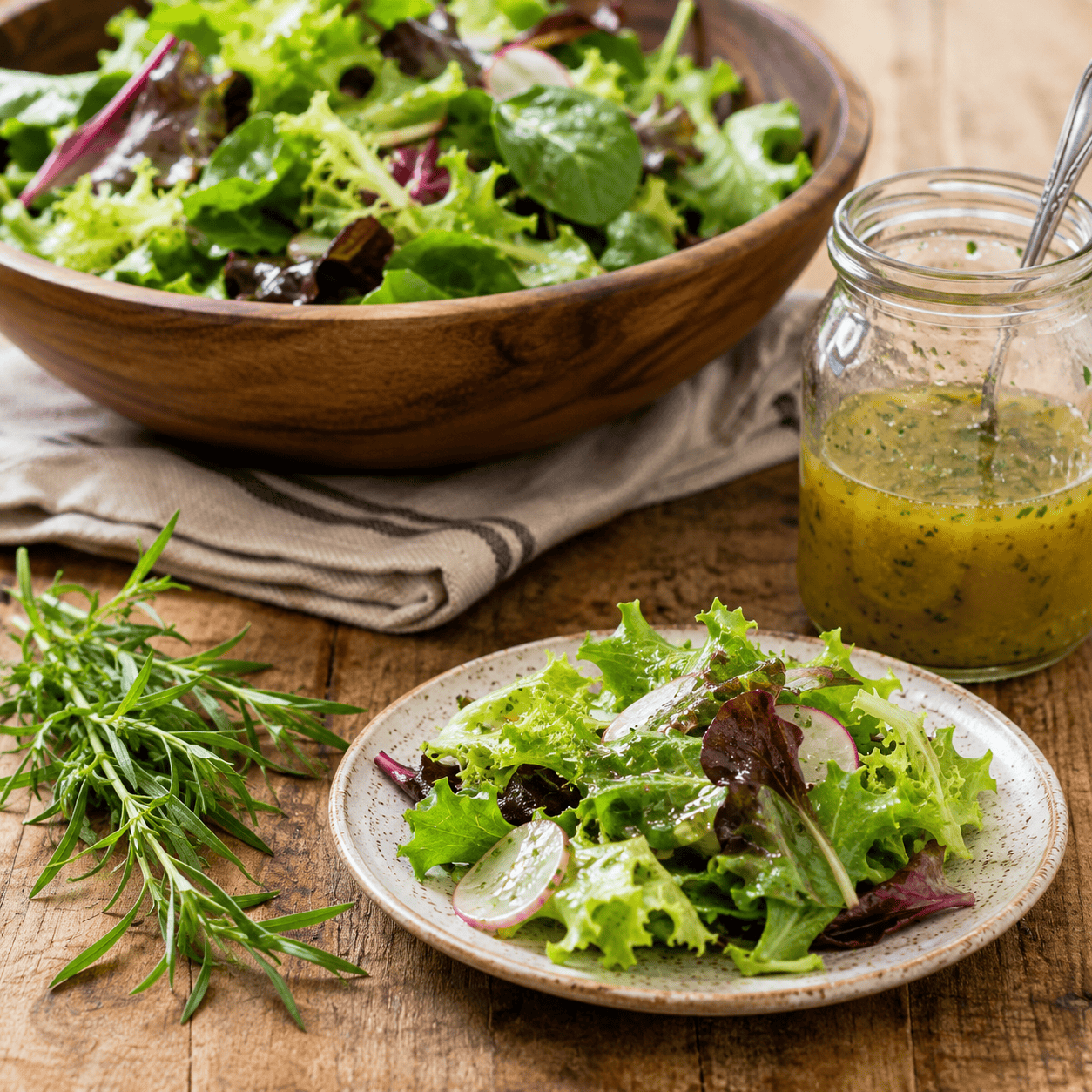
Tarragon salad dressing comes straight out of the French kitchen. The French call the herb estragon, and it is one of the classic fines herbes, alongside parsley, chives and chervil. It is the herb that makes béarnaise taste like béarnaise, and French cooks have steeped it in vinegar for generations. Pair it with shallots, the gentler, sweeter cousin of the onion, and a spoonful of Dijon mustard from Burgundy, and you have one of the great bistro flavor combinations. This dressing borrows directly from that tradition. Simple. Elegant. Reliable.
The technique is the classic French vinaigrette: about one part acid to three parts oil, held together with mustard. The details make the difference. Soak the shallots in vinegar first so they lose their raw bite. Whisk the oil in slowly so it emulsifies into something silky instead of a greasy split. Add the tarragon last so its aroma stays bright.
Open the jar and you get it right away: sharp vinegar, sweet shallot and that soft, faint anise of fresh tarragon. Spooned over butter lettuce, roasted asparagus or a piece of grilled salmon, it makes simple food taste polished. For a Mother's Day menu, this dressing belongs on a delicate spring salad. It quietly makes the whole table feel more refined, and it is the kind of dressing that makes guests ask what's in it.
Technique Intelligence
Technique: Salads & Dressings · Chapter 34 · Technique School
Let the shallots bloom first
Mince the shallot finely. Put it in the bowl with the champagne vinegar and wait 5 to 10 minutes before adding anything else. The vinegar softens its bite and lightly pickles it. Raw onion harshness gone, sweetness left behind.
Build the base before the oil
Whisk the Dijon, salt, pepper, lemon zest, lemon juice and honey into the shallot mixture until smooth. Salt dissolves in vinegar, not in oil, so season now. Mustard is the emulsifier. It is what lets oil and vinegar hold together.
Stream the oil slowly
Drizzle in the olive oil while whisking constantly. Slowly. The dressing should turn silky and lightly thickened, with a soft sheen. Dump the oil in all at once and it splits. If that happens, whisk a teaspoon of Dijon in a clean bowl and slowly whisk the split dressing into it. A lidded jar works too: add everything except the tarragon, close it tight and shake hard for 30 seconds.
Add tarragon last
Chop the tarragon just before using it and fold it in at the end. Bruised, long-chopped tarragon darkens and loses its perfume.
Taste in order
Salt, then acid, then sweetness, then herbs. Not the other way around. A great vinaigrette tastes balanced enough to enjoy off a spoon. Check it on a lettuce leaf too; it should taste just right on greens. Then let it rest 10 minutes so the flavors settle.
Ingredient Intelligence
Fresh Tarragon
Tarragon is the star, and fresh matters. Dried tarragon loses the brightness and delicate perfume that make this dressing special. Look for French tarragon: the leaves should smell lightly sweet, herbal and faintly of anise. If tarragon is hard to find, use a mix of chervil and chives for a softer herb dressing, or a little fresh basil for a different but still sweet, anise-tinged note.
Shallots
Shallots bring sweetness and soft bite without the harshness of raw onion. One small shallot gives about 2 tablespoons minced. No shallots? Use the white part of 2 scallions or a tablespoon of very finely minced red onion, soaked in the vinegar the same way.
Champagne Vinegar
Champagne vinegar is ideal: bright but gentle. Napa Valley Naturals makes a good one. White wine vinegar works beautifully in its place. Sherry vinegar gives a deeper, warmer dressing.
Dijon Mustard
Dijon gives body and holds the emulsion. Maille and Edmond Fallot are both classic French choices. Yellow mustard is too mild and too vinegary to do the same job.
Extra Virgin Olive Oil
Olive oil should be clean and grassy rather than aggressively bitter. A very peppery oil can overpower the tarragon. Good: California Olive Ranch. Better: Lucini. Best: a high-quality single-estate extra virgin olive oil. For a milder dressing, swap a quarter of the olive oil for a neutral oil like avocado oil.
Lemon, Honey, Salt and Pepper
Lemon zest and juice brighten the finish. A touch of honey softens sharp acidity if needed; leave it out if your vinegar is mild. Use kosher salt, and crack the black pepper fresh.
Variations
- Creamy tarragon: whisk in 2 tablespoons crème fraîche or ¼ cup Greek yogurt. Excellent with salmon or chicken.
- Chive and tarragon: add 1 tablespoon finely sliced chives for a softer herb profile.
- Capers and lemon: fold in 1 tablespoon chopped capers for a savory edge with seafood.
- Warm potato version: add 1 teaspoon whole grain mustard and toss with potatoes while they are still steaming.
- Shallot and garlic: add ½ small grated garlic clove for deeper savory character.
- Sherry vinegar: swap the champagne vinegar for sherry vinegar for more warmth.
- Steak sauce: a spoonful over grilled steak is unexpectedly excellent.
Make Ahead, Storage and Freezing
The dressing gets better after 30 minutes, once the tarragon perfumes the oil, so it is a natural make-ahead. Store it in a sealed jar in the refrigerator for 5 to 7 days. The tarragon darkens after a few days but still tastes good. For the brightest color, make the base ahead and stir in fresh tarragon the day you serve it.
Olive oil firms up in the refrigerator. That's quality, not a flaw. Let the jar sit at room temperature for 15 to 20 minutes, then shake well.
Do not freeze it. The emulsion breaks and the fresh herbs turn limp and dark when thawed.
What to Serve with Tarragon Salad Dressing
Spoon it over spring greens, butter lettuce, shaved fennel, roasted asparagus, green beans, pea salads, warm potatoes or ripe tomatoes. It also works as a sauce:
- West Coast Style Grilled Salmon
- Irish Whiskey Glazed Salmon
- Indoor Grilled Steak
- Chicken Cordon Bleu with a simple green salad
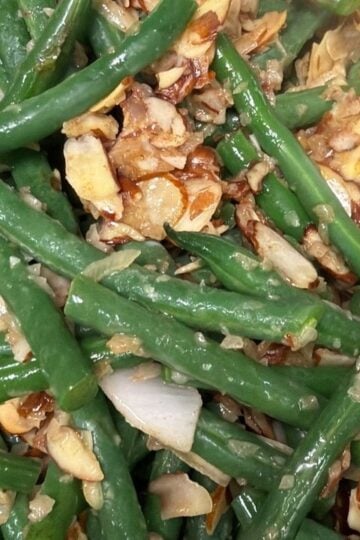
- Green Beans Almondine
- Easter Dinner Menu for a spring table
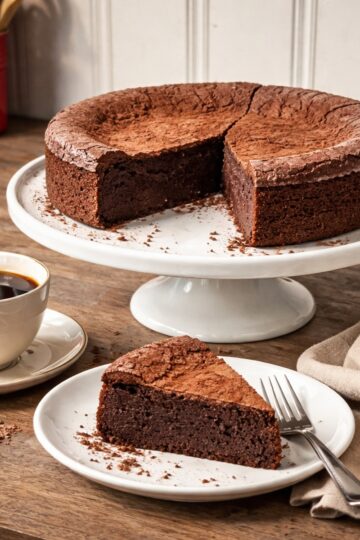
- Dessert: Angel Food Cake with Fresh Berries
Tarragon Salad Dressing FAQ
What does tarragon taste like?
Fresh French tarragon tastes sweet and herbal with a light anise or licorice note. In a vinaigrette it reads as fresh and floral rather than strongly licorice.
Can I use dried tarragon in salad dressing?
Fresh is much better. If you must use dried, use about 2 teaspoons dried in place of 2 tablespoons fresh, and let the dressing sit for 30 minutes so the herb can soften.
What is the ratio for a French vinaigrette?
The classic ratio is about 1 part acid to 3 parts oil. This recipe uses 4 tablespoons of vinegar and lemon juice to ¾ cup of olive oil.
Why does my vinaigrette separate?
Oil and vinegar separate naturally. Dijon mustard helps hold them together, and adding the oil slowly while whisking makes a stronger emulsion. If it separates in the fridge, just shake or whisk it again.
How long does homemade tarragon dressing last?
Up to 5 to 7 days in a sealed jar in the refrigerator. Bring it to room temperature for 15 to 20 minutes and shake before serving.
What can I use instead of champagne vinegar?
White wine vinegar is the closest substitute. Sherry vinegar or a mild rice vinegar also work.
Tarragon Salad Dressing

Equipment
- Citrus zester or microplane
- Small mason jar or dressing bottle for storage
Ingredients
- 1 small shallot finely minced, about 2 tablespoons
- 3 tablespoon champagne vinegar
- 1 teaspoon Dijon mustard 6 g
- 1 teaspoon honey (optional for balance), 7 g
- ½ teaspoon kosher salt plus more to taste
- ¼ teaspoon freshly cracked black pepper
- 1 teaspoon fresh lemon zest
- 1 tablespoon fresh lemon juice 15 ml
- 2 tablespoon fresh tarragon finely chopped
- ¾ cup extra-virgin olive oil
Instructions
- Bloom the shallots: Place 2 tablespoons (20 g) finely minced shallot in a mixing bowl with 3 tablespoons (45 ml) champagne vinegar. Let stand for 5 to 10 minutes to soften and lightly pickle the shallot.
- Build the vinaigrette base: Whisk 1 teaspoon (6 g) Dijon mustard, 1 teaspoon (7 g) honey (optional), ½ teaspoon kosher salt, ¼ teaspoon freshly cracked black pepper, 1 teaspoon fresh lemon zest, and 1 tablespoon (15 ml) fresh lemon juice into the shallot mixture until smooth.
- Emulsify: Slowly drizzle in ¾ cup (180 ml) extra virgin olive oil, whisking constantly until silky and lightly thickened.
- Finish with herbs: Fold in 2 tablespoons finely chopped fresh tarragon leaves.
- Taste and adjust: Add more salt for brightness, more lemon for lift, or a small touch of honey if the acidity feels sharp.
- Rest: Let the dressing rest for 10 minutes before serving so the flavors settle.
- Shake before using: Shake or whisk briefly before using.
Notes
Creamy Tarragon Dressing Whisk in 2 tablespoons crème fraîche or ¼ cup Greek yogurt for a creamy version perfect with salmon or chicken. Chive & Tarragon Add 1 tablespoon finely sliced chives for a softer herb profile. Capers & Lemon Fold in 1 tablespoon chopped capers for savory brightness—excellent with seafood. Warm Potato Version Add 1 teaspoon whole grain mustard and toss with warm potatoes while still steaming. Shallot Garlic Version Add ½ small grated garlic clove for deeper savory character. Notes
Fresh tarragon is essential—dried simply doesn’t taste the same.
Champagne vinegar gives the cleanest flavor, but white wine vinegar is an excellent substitute.
This dressing gets better after 30 minutes once the tarragon perfumes the vinaigrette.
Excellent on butter lettuce, shaved fennel salads, asparagus, grilled salmon, roast chicken, or spring vegetables.
Storage Store refrigerated in a sealed jar for 5–7 days. Bring to room temperature for 15–20 minutes before serving, then shake well. Olive oil will firm up in the refrigerator—that’s normal.
Made this? Leave a star rating and a comment below: what did you spoon it over? I read every comment.

Comments
No Comments