
What Is It
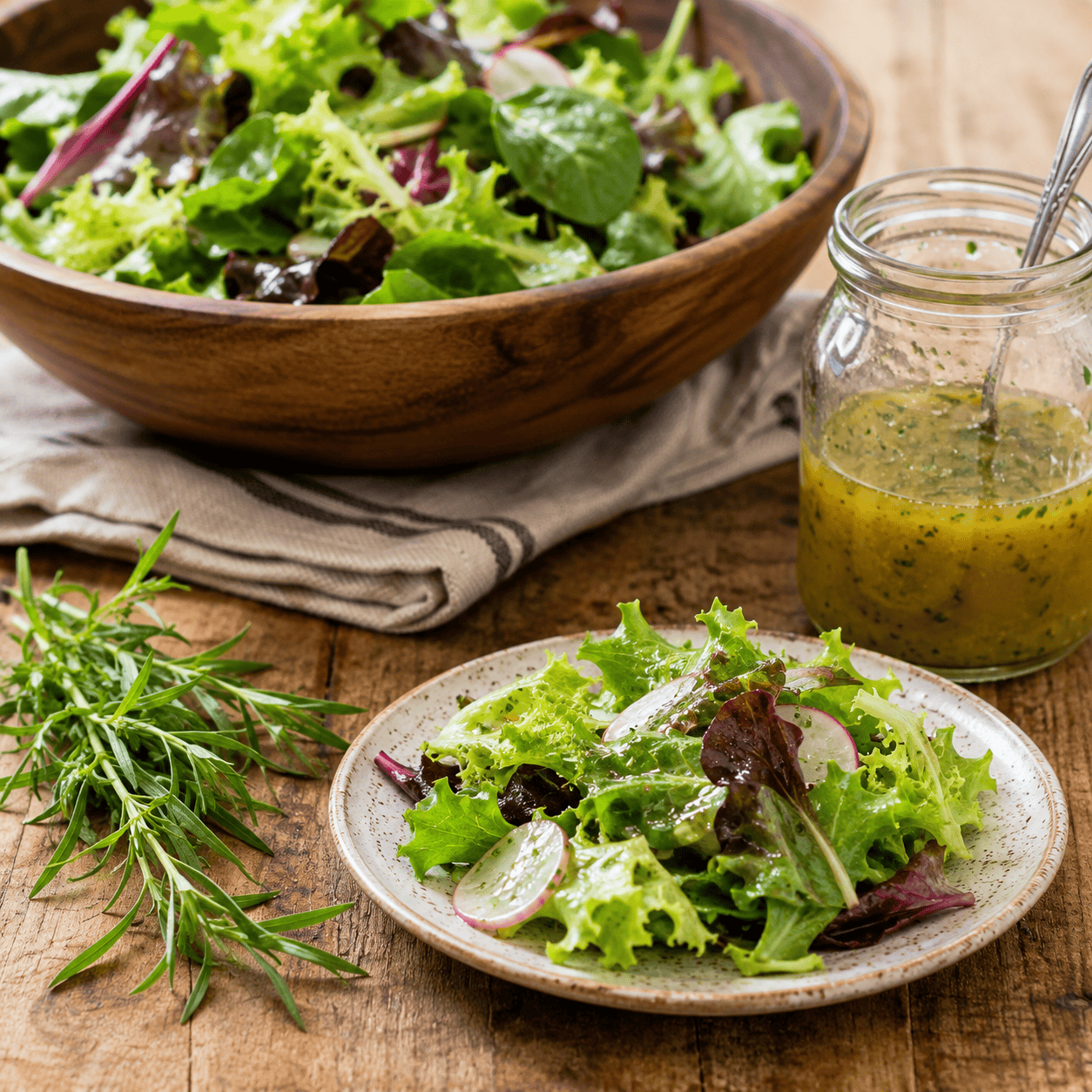
Tarragon shallot dressing is one of those quiet kitchen staples that makes simple food taste polished. Bright acidity, soft shallot sweetness, silky olive oil, and the unmistakable delicate anise note of fresh tarragon create a vinaigrette that feels unmistakably French, elegant, and deeply versatile.
It’s light enough for tender spring greens, structured enough for roasted vegetables, and refined enough to spoon over grilled salmon, chicken, asparagus, or warm potatoes.
The flavor is clean, herbaceous, and layered—sharp at first, then soft, floral, and savory as it settles on the palate.
This is the kind of dressing that makes guests ask what’s in it.
Origin
Tarragon has long been one of the defining herbs of French cooking, prized for its subtle licorice-like aroma and remarkable affinity for cream, butter, mustard, vinegar, chicken, seafood, and eggs.
Combined with shallots—a gentler, sweeter cousin to onion—it creates one of classic French cuisine’s favorite flavor pairings.
This dressing borrows directly from that tradition: bright vinaigrette structure, softened aromatics, and fresh herbs doing the heavy lifting rather than excessive ingredients.
Simple.
Elegant.
Reliable.
Key Ingredients
Tarragon is the star, and fresh matters.
Dried tarragon loses the brightness and delicate perfume that make this dressing special. Fresh leaves should smell lightly sweet, herbal, and faintly of anise.
Shallots bring sweetness and soft bite without the harshness of raw onion.
Finely mincing—or gently macerating them in vinegar—takes away raw sharpness and rounds flavor beautifully.
Olive oil should be clean and grassy rather than aggressively bitter.
Good: California Olive Ranch
Better: Lucini
Best: high-quality single estate extra virgin olive oil
Champagne vinegar is ideal—bright but gentle.
White wine vinegar works beautifully.
A squeeze of lemon can brighten the finish.
Dijon mustard gives body and helps emulsify.
Salt sharpens everything.
Black pepper should be fresh cracked.
A touch of honey can soften sharp acidity if needed.
Key Technique
Let the shallots bloom first.
Mince them finely and let them sit in vinegar for 5–10 minutes before adding anything else. That quick maceration softens their bite and lightly pickles them.
Whisk Dijon into the vinegar first, then slowly stream in olive oil to create emulsion.
Fresh tarragon should be folded in at the end so its aroma stays vibrant.
Taste in order:
Salt → acid → sweetness → herb balance
Not the other way around.
A great vinaigrette tastes balanced enough to enjoy off a spoon.
Key Equipment
A sharp knife for fine shallot work, a whisk, small mixing bowl, microplane for lemon zest, and a jar with lid for shaking and storing are all you need.
Simple equipment.
Restaurant result.
Basic Preparation Outline
Finely minced shallots are soaked briefly in champagne vinegar, then whisked with Dijon, salt, pepper, and a little honey if desired. Olive oil is streamed in slowly until silky, then fresh chopped tarragon and a touch of lemon are folded in.
Rest for 10 minutes before serving.
The flavors settle beautifully.
How to Enjoy
Perfect over spring greens, butter lettuce, shaved fennel, roasted asparagus, grilled salmon, roast chicken, warm potatoes, green beans, pea salads, or spooned lightly over fresh tomatoes.
For your Mother’s Day menu, this dressing belongs on a delicate spring salad.
It quietly makes the whole table feel more refined.
Variations
Fold in crème fraîche for a creamy version.
Add chopped chives for softness.
Use sherry vinegar for deeper warmth.
Add capers for savory edge.
A spoonful over grilled steak is unexpectedly excellent.
Storage
Keeps refrigerated for 5–7 days.
Bring to room temperature before serving and shake well—olive oil naturally firms when chilled.
That’s quality, not a flaw.
Tarragon Salad Dressing

Equipment
- Chef’s knife
- Small mixing bowl
- Whisk
- Citrus zester or microplane
- Measuring spoons / measuring cup
- Small mason jar or dressing bottle for storage
- Rubber spatula
Ingredients
- 2 tablespoons 20 g finely minced shallot
- 3 tablespoons 45 ml champagne vinegar (or white wine vinegar)
- 1 teaspoon 6 g Dijon mustard
- 1 teaspoon 7 g honey (optional, for balance)
- ½ teaspoon kosher salt plus more to taste
- ¼ teaspoon freshly cracked black pepper
- 1 teaspoon fresh lemon zest
- 1 tablespoon 15 ml fresh lemon juice
- 2 tablespoons 6–8 g finely chopped fresh tarragon leaves
- ¾ cup 180 ml extra virgin olive oil
Instructions
Bloom the shallots
- Finely mince 2 tablespoons (20 g) shallot and place in a mixing bowl with 3 tablespoons (45 ml) champagne vinegar. Let stand for 5–10 minutes to soften and lightly pickle the shallot.
Build the vinaigrette base
Whisk into the shallot mixture:
- 1 teaspoon (6 g) Dijon mustard
- 1 teaspoon (7 g) honey (optional)
- ½ teaspoon kosher salt
- ¼ teaspoon freshly cracked black pepper
- 1 teaspoon fresh lemon zest
- 1 tablespoon (15 ml) lemon juice
- Whisk until smooth.
Emulsify
- Slowly drizzle in ¾ cup (180 ml) extra virgin olive oil, whisking constantly until silky and lightly thickened.
Finish with herbs
- Fold in 2 tablespoons finely chopped fresh tarragon and taste.
Adjust:
- more salt for brightness
- more lemon for lift
- small touch of honey if acidity feels sharp
- Let dressing rest for 10 minutes before serving so flavors settle.
- Shake or whisk briefly before using.
Notes
Creamy Tarragon Dressing Whisk in 2 tablespoons crème fraîche or ¼ cup Greek yogurt for a creamy version perfect with salmon or chicken. Chive & Tarragon Add 1 tablespoon finely sliced chives for a softer herb profile. Capers & Lemon Fold in 1 tablespoon chopped capers for savory brightness—excellent with seafood. Warm Potato Version Add 1 teaspoon whole grain mustard and toss with warm potatoes while still steaming. Shallot Garlic Version Add ½ small grated garlic clove for deeper savory character. Notes
Fresh tarragon is essential—dried simply doesn’t taste the same.
Champagne vinegar gives the cleanest flavor, but white wine vinegar is an excellent substitute.
This dressing gets better after 30 minutes once the tarragon perfumes the vinaigrette.
Excellent on butter lettuce, shaved fennel salads, asparagus, grilled salmon, roast chicken, or spring vegetables.
Storage Store refrigerated in a sealed jar for 5–7 days. Bring to room temperature for 15–20 minutes before serving, then shake well. Olive oil will firm up in the refrigerator—that’s normal.


Comments
No Comments