Greece at a Glance
Flavor profile: Bright • Herbaceous • Savory • Fresh • Fire-kissed
Primary fat: Olive oil
Heat level: Low to moderate, occasionally assertive
Signature ingredients: Olive oil, lemon, oregano, yogurt, feta, lamb, seafood, greens
Texture focus: Crisp-tender contrast • creamy against char • bright finishes
Cooking style: Ingredient-driven • rustic technique • balanced simplicity
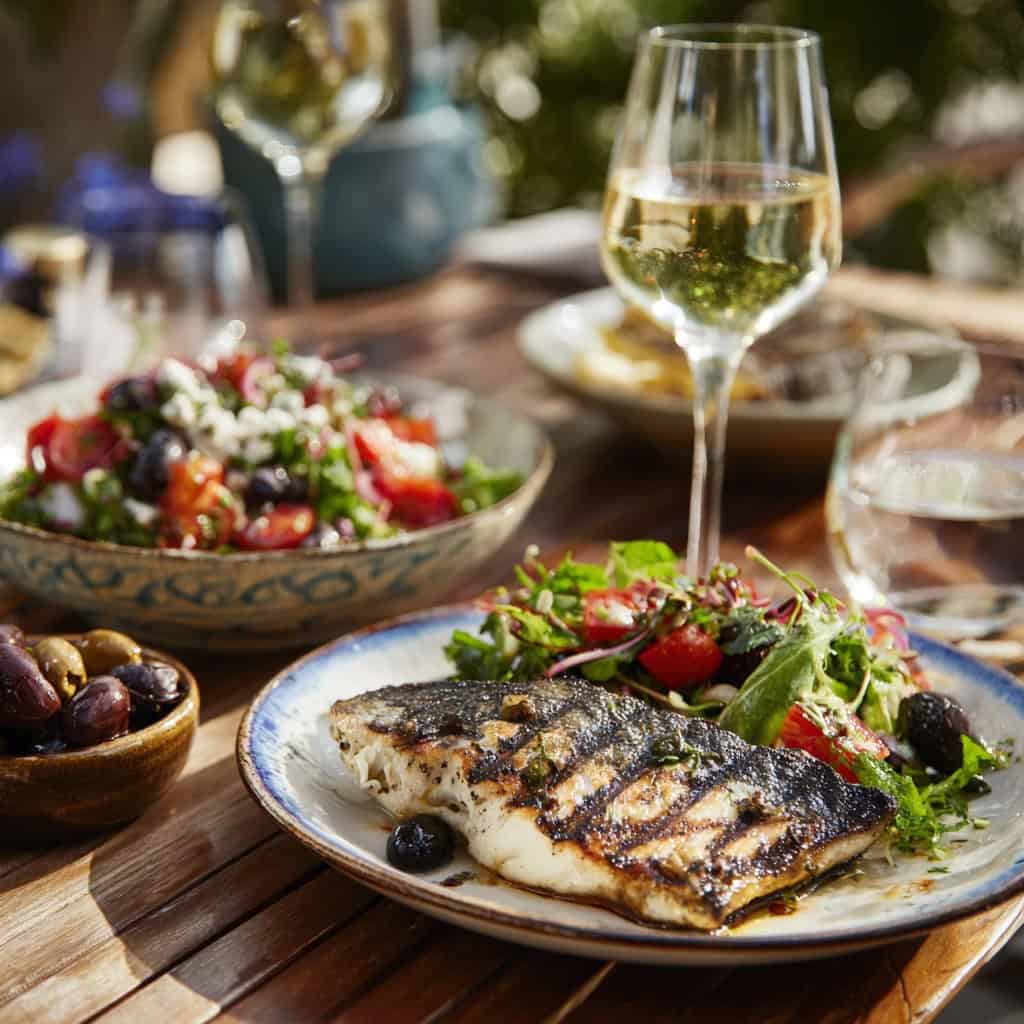
Greek food isn't built on excess, but on bright ingredients, open fire, and the quiet confidence of knowing when enough is enough.
Hands passing warm pita, grilled lamb, lemon potatoes, tzatziki, and glasses of wine across a sunlit rustic table overlooking the sea.
Greek cooking looks simple, but its real strength is balance. Olive oil, lemon, herbs, salt, smoke, and fresh ingredients are used with purpose, not abundance.
Flavors shift from mountains to coastlines, from village ovens to island grills, yet the guiding idea remains constant: cook simply, season boldly, and finish with brightness.
The Core Idea
Greek cooking is built on three principles:
Quality ingredients
Simple cooking
Balance through acid, herbs, and olive oil
Master those, and most Greek cooking begins to feel intuitive.
Why Greek Food Tastes So Distinct
Unlike cuisines built around spice layering or heavy sauces, Greek food seeks freshness and clarity. Lamb should taste like lamb. Tomatoes should taste sun-ripened. Yogurt should feel cool and rich. Olive oil should be tasted, not hidden.
Lemon sharpens.
Herbs lift.
Salt brings everything forward.
Too much seasoning muddies what Greek cooking does best.
How Greek Meals Are Structured
Traditional Greek meals are built for sharing, movement, and abundance at the table rather than strict courses.
Mezze → Main Dish → Shared Vegetables / Salads → Bread / Cheese → Sweet Finish
At home, these are often served together, creating the generous communal style that defines Greek dining.
The table should feel full, but never heavy.
Mountains to Sea: A Regional Shift
Greek cuisine changes with geography more than anything else.
Northern Greece
Braises, savory pies, grilled meats, warming village cooking
Central Greece
Beans, roasted meats, olive oil cooking, rustic seasonal dishes
The Islands
Seafood, capers, citrus, grilled fish, herbs, lighter cooking
Crete
Wild greens, olive oil, lamb, grains, simple deeply rooted cooking
Think of Greek food as mountain cooking meeting coastal sunlight.
Core Techniques You’ll See Everywhere
Greek cooking relies on confidence with heat, seasoning, and finishing.
• Grilling over live fire for smoke and char
• Roasting meats and vegetables until deeply flavored
• Layering olive oil throughout cooking, not only at the end
• Balancing richness with lemon and herbs
• Working with yogurt, cheese, and brine for contrast
• Finishing with fresh herbs, olive oil, and citrus
Simple cooking, precise finishing.
The Greek Pantry in One Sentence
A small collection of powerful ingredients used repeatedly with confidence.
Olive oil, lemons, garlic, oregano, dill, yogurt, feta, olives, grains, greens, seafood, lamb, beans, and seasonal vegetables form the backbone of Greek cooking.
Restaurant Greek vs. Everyday Greek
Restaurant Greek often leans heavier—large platters, more cheese, richer sauces, and broader seasoning.
Home Greek cooking is lighter, brighter, and simpler.
More grilled fish.
More beans.
More greens.
More olive oil.
More lemon.
Less excess.
If a Greek dish feels weighed down, it’s usually restaurant interpretation rather than everyday village cooking.
Why Finishing Matters So Much
Greek cooking often comes alive at the very end:
A squeeze of lemon
A drizzle of olive oil
Fresh oregano or dill
A crumble of feta
A spoonful of yogurt
Those final touches bring the food into focus.
Without them, dishes feel flat.
With them, they feel unmistakably Greek.
A Simple Way to Judge Your Results
If the finished dish tastes bright, balanced, and clearly of its main ingredient, you’re on the right path.
If it feels dull, heavy, or overly rich, it likely needs acid, herbs, or restraint.
Greek food should taste alive.