
By Chef Samantha Tilley, executive chef at The Market CT and former chef-owner of Mockingbird Kitchen & Bar.
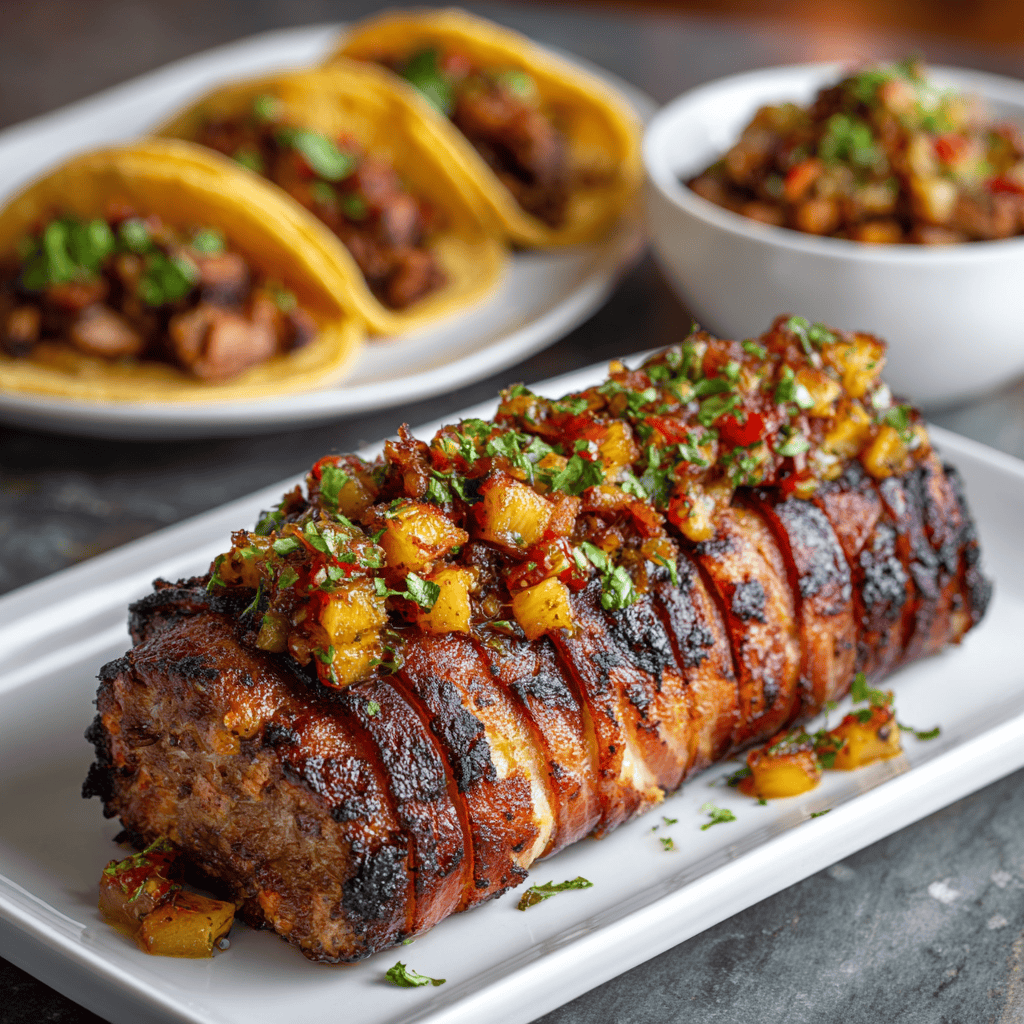
Pork al pastor comes from Mexico City, but its roots run back to Lebanon. Lebanese families who settled in Puebla in the early 1900s brought shawarma with them: meat stacked on a vertical spit and shaved off as it cooked. Puebla cooks turned it into tacos árabes. By the 1960s, Mexico City taqueros had swapped the lamb for pork, painted it red with a chile and achiote adobo, crowned the spit (the trompo) with a pineapple, and called it al pastor, "shepherd style," a nod to its lamb beginnings.
Al pastor is not just marinated pork. It is a structure. On the trompo, thin slices are pressed into a tower, fat renders slowly and bastes everything below it, and the cook shaves off edges that are charred outside and juicy within. Most home kitchens have no spit, which is why most home versions come out wet or soft. This method builds the same structure in a loaf pan: thin slices, layered fat, a slow cook, a rest, then a hard sear. You're not roasting pork. You're recreating a vertical cooking system horizontally.
Then comes the best part. The cast iron is smoking, the slices hit the pan and hiss, the edges curl and darken, and the kitchen smells of chiles, vinegar and caramelizing pork. Pile it into doubled corn tortillas with roasted pineapple, onion, cilantro and a squeeze of lime, and let everyone build their own. Nobody waits politely for this one.
Technique Intelligence
Al pastor follows a sequence: toast, hydrate, blend, slice, layer, cook, rest, shave, crisp. Skip one and the result goes flat.
Toast the Chiles, Then Bloom the Spices
Toast the dried chiles in a dry pan until fragrant and lightly blistered. Toasting wakes up their oils. Soften them in hot stock, then bloom the cumin, oregano and achiote in oil for 30 seconds. Blend until completely smooth. A weak base means the whole dish tastes shallow. Watch the chiles closely: they go from smoky to bitter in seconds, and you will smell the change.
Slice Thin. Then Pound.
This is where most home versions fail. Slice the pork as thin as you can, then pound each slice to under ¼ inch. Firm it in the freezer for 15 minutes first and the knife glides through. Thin slices give you surface area for the adobo, layers that hold together, and fat that renders evenly. Chunks of pork make a different dish.
Layer Bacon and Pork
Bacon isn't a shortcut. It's a stand-in for vertical fat basting. Alternate bacon and marinated pork in the loaf pan and press each layer down. As it cooks, the fat renders downward and the meat bastes itself. You are building a compressed, sliceable block.
Cook Low and Slow at 275°F
275°F is not random. Low heat gives the pork time to render its fat, soak up the adobo and knit together into one piece. Too hot and it dries out. Too fast and it never holds together. Expect about 4 hours, until the pork is very tender. It will be far past the USDA safe minimum of 145°F for pork.
Rest and Chill Before Slicing
Chill the cooked loaf for at least 2 hours, or overnight. Cold fat sets and the proteins firm up, so the block slices cleanly instead of falling apart. This is the difference between al pastor and a braise. You're creating something you can shave, not shred.
Sear Hard to Finish
Slice the cold loaf thin and crisp the slices in a cast iron pan with a spoonful of the reserved fat over medium-high heat. Add a splash of the reserved juices and let them reduce to a light glaze. The edges crackle, the adobo caramelizes, and the color deepens to brick red. Without this step, it's just marinated pork.
Ingredient Intelligence
Pork
Use pork loin or sirloin. Lean cuts slice cleanly and hold their shape, and the bacon supplies the fat. Pork shoulder (Boston butt) also works and is more traditional on a trompo; it's richer and slightly harder to slice thin, so freeze it a little longer before cutting.
Dried Chiles and Chipotle
Ancho and guajillo give depth and that deep red color. Pasilla can stand in for guajillo. One chipotle in adobo adds smoke and a little acid. The goal is layered heat, not blunt spice. Buy chiles that are soft and pliable, not brittle; brittle chiles are old. Look for Mexican brands such as El Guapo, or a Latin market with high turnover. For chipotles in adobo, San Marcos and La Costeña are easy to find.
Achiote
Achiote paste is made from ground annatto seeds, spices and acid. It brings the signature color and an earthy, slightly bitter note. Without it, you have chile pork, not al pastor. El Yucateco and La Anita are reliable pastes. Achiote powder works too; use the same amount.
Vinegar and Sugar
Distilled white vinegar cuts the fat and sharpens the adobo. A little sugar rounds off the acid. Measure both. Too much of either tips the balance. Apple cider vinegar is the best substitute.
Bacon
Bacon replaces the spit's constant basting and adds a smoky backbone. Use regular-cut, not thick-cut; thin slices render faster and layer more tightly. Skip it and you lose moisture and depth. If you can't use bacon, layer in thin slices of pork fatback or brush each layer with lard.
Pineapple
Pineapple is not just garnish. Roasted with a little of the pork fat, it turns sweet, tart and caramelized, and it balances the richness of the meat. Fresh pineapple only; canned won't brown properly.
Tortillas
Use small corn tortillas and double them, the way taquerías do, so they hold up to the juices. Buy them fresh from a local tortillería if you can. Warm them on a dry griddle until they puff and smell toasty.
Variations
- Shoulder version: Use pork shoulder instead of loin for a richer, more traditional result.
- Grilled finish: Crisp the slices on a hot grill pan or plancha instead of cast iron.
- Grilled pineapple: Grill the pineapple quarters over high heat instead of roasting them for a smokier edge.
- Gringas: Serve the pork in flour tortillas with melted Oaxaca or Monterey Jack cheese, a Mexico City favorite.
- Bowls: Serve over rice with black beans, pickled onions and the roasted pineapple.
For a seafood take on the same flavors, try the Swordfish Al Pastor.
Make Ahead, Storage and Freezing
Make ahead: This is a make-ahead dish by design. Layer the loaf and refrigerate it for at least 4 hours or up to 36 hours before cooking. After cooking, it needs at least 2 hours in the fridge, or overnight, before slicing.
Refrigerate: Keep the cooked loaf, covered, for up to 4 days. Store the reserved fat and juices separately. The flavor deepens after a day.
Reheat: Slice and re-crisp in a hot pan with a little reserved fat. Avoid the microwave; it turns the crisp edges soft.
Freeze: Freeze the cooked, chilled loaf before the final sear, wrapped tightly, for up to 3 months. Thaw overnight in the fridge, then slice and crisp.
What to Serve with Pork Al Pastor
- Yucatán Corn Salad
- Chicken Tortilla Soup to start
- Vinegar slaw for crunch
- Carne Asada and Carnitas for a taco night spread
- Chicken Tinga for a second filling
- Rice, black beans, salsa verde and lime wedges
Want the bigger story? Read Tacos: Stories Wrapped in a Tortilla.
Pork Al Pastor FAQ
Where does al pastor come from?
Al pastor comes from Mexico City. It grew out of the shawarma that Lebanese immigrants brought to Puebla in the early 1900s. Mexican cooks switched to pork, added a chile and achiote marinade, and topped the spit with pineapple.
Can I make al pastor without a vertical spit?
Yes. Layer thinly sliced, marinated pork with bacon in a loaf pan, cook it slowly at 275°F, chill it, then slice it thin and sear the slices in a hot cast iron pan. This copies the layering, fat basting and crisp edges of the spit.
What cut of pork is best for al pastor?
This recipe uses pork loin or sirloin, with bacon for fat. Pork shoulder is the traditional choice and works well too. Whatever the cut, slice it thin.
Why is my al pastor mushy?
Usually it was sliced before it was fully chilled, or the slices were not seared hard enough. Chill the cooked loaf for at least 2 hours, slice it cold, and crisp the slices in a very hot pan.
Why doesn't it taste like taquería al pastor?
Check two things: achiote and the chiles. Achiote gives the signature flavor and color, and the chiles need to be toasted and blended smooth. Fresh roasted pineapple on top matters too.
Can I skip the bacon?
You can, but you lose the self-basting and some moisture. Use pork shoulder instead of loin, or layer in thin slices of fatback.
How far ahead can I make al pastor?
You can layer the marinated pork up to 36 hours before cooking, and the cooked loaf keeps in the fridge for up to 4 days. Slice and sear just before serving.
Pork Al Pastor (Loaf Pan Method, Crisped Finish)

Ingredients
For the Pork + Adobo
- 2 whole ancho chiles seeded
- 2 whole guajillo or pasilla chiles seeded
- ½ cup low-sodium chicken stock
- 2 teaspoons vegetable oil
- 1 teaspoon dried Mexican oregano
- 1 teaspoon ground cumin
- 1 tablespoon achiote paste or powder
- 1 chipotle chile in adobo + 2 teaspoons adobo sauce
- ¼ cup distilled white vinegar
- 2 ½ teaspoons kosher salt
- 2 teaspoons sugar
- 3 cloves garlic
- 2 pounds pork loin or sirloin thinly sliced
- 8 ounces bacon
To Finish
- 1 small pineapple peeled and quartered
- 32 –48 corn tortillas
- 1 cup diced white onion
- ½ cup chopped cilantro
- 1 cup salsa verde
- 3 –4 limes cut into wedges
Instructions
Build the adobo
- Toast the chiles: Toast 2 ancho chiles and 2 guajillo or pasilla chiles in a dry pan over medium-high heat for about 5 minutes, turning, until fragrant and lightly blistered.
- Soften the chiles: Add ½ cup low-sodium chicken stock and bring to a boil, then transfer to a bowl and let sit for 10 minutes to soften.
- Bloom the spices: In the same pan, heat 2 teaspoons vegetable oil over medium heat. Add 1 teaspoon ground cumin, 1 teaspoon dried Mexican oregano, and 1 tablespoon achiote paste or powder, stirring for about 30 seconds until aromatic.
- Add the chipotle: Add 1 chipotle chile plus 2 teaspoons adobo sauce and cook another 30 seconds.
- Season the base: Add ¼ cup distilled white vinegar, 2½ teaspoons kosher salt, and 2 teaspoons sugar. Remove from heat.
- Blend the adobo: Transfer everything to a blender with the softened chiles and soaking liquid, plus 3 cloves garlic, and blend until completely smooth.
Prepare the pork
- Slice the pork: Slice 2 pounds pork as thinly as possible (partially freeze for 15 minutes if needed).
- Pound the slices: Pound each slice to under ¼ inch thick.
- Marinate: Toss the pork thoroughly with the adobo until evenly coated.
Layer the structure
- Layer the loaf pan: Line a loaf pan with 8 ounces bacon, then layer in the marinated pork. Continue alternating bacon and pork until all the meat is used, pressing lightly to compact.
- Chill: Cover and refrigerate for at least 4 hours (up to 36 hours).
Cook low and slow
- Heat the oven: Preheat the oven to 275°F.
- Roast: Place the loaf pan on a sheet tray and cook uncovered for about 4 hours, until very tender and fully cooked through.
- Set the loaf: Remove, cool slightly, then cover and refrigerate for at least 2 hours (or overnight) to set the structure.
Slice and crisp
- Unmold and slice: Remove the chilled meat from the pan, reserving the rendered fat and juices separately. Slice the meat thinly.
- Crisp the pork: Heat 1 tablespoon reserved fat in a cast iron pan over medium-high heat. Add the sliced pork and cook, stirring occasionally, until browned and crisp in spots.
- Glaze: Add a few tablespoons reserved juices and cook until reduced to a light glaze.
Roast the pineapple
- Roast the pineapple: Brush the pineapple with a little reserved fat and roast at 350°F for 20 to 25 minutes, until tender and lightly caramelized.
- Chop: Chop into chunks.
Serve
- Build the tacos: Serve the pork and pineapple in warm corn tortillas with diced white onion, chopped cilantro, salsa verde, and lime wedges. Double-stack the tortillas for structure.
Notes
Resting the meat before slicing is critical for structure
Final sear defines texture—don’t skip it
Bacon is functional—it replaces vertical spit fat
Made this? Leave a star rating and a comment below: did you crisp yours in cast iron or on the grill? I read every comment.


Comments
No Comments