
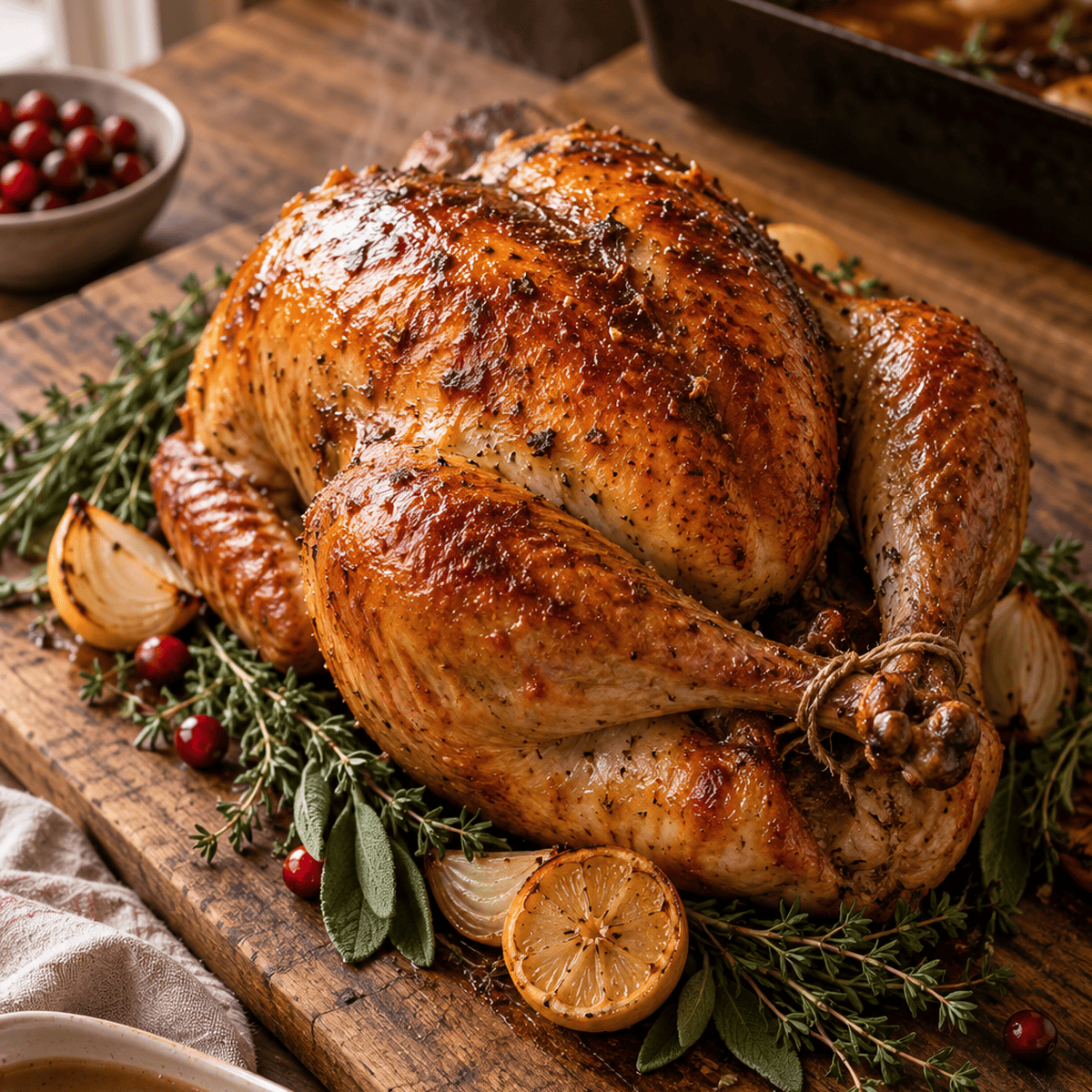
By Chef Samantha Tilley, executive chef at The Market CT and former chef-owner of Mockingbird Kitchen & Bar.
The turkey is the one dish on the Thanksgiving table everyone watches. It arrives last, it is carved in front of everyone, and it carries a century of expectations about what a holiday bird should be. It is also, for many home cooks, the dish they fear most.
The good news: the most reliable way to a great turkey is also one of the simplest. You salt it, you wait, and you roast it. That is a dry brine, and this guide walks you through every step.
Why the Turkey Is on the Table at All
Turkey is a native North American bird, and by the 19th century it had become the centerpiece of the American autumn harvest feast. It was large enough to feed a crowd, it was raised on farms rather than bought at a premium, and a single bird could serve an extended family. Sarah Josepha Hale, the magazine editor who campaigned for years to make Thanksgiving a national holiday, helped fix the roast turkey in the public imagination, and Abraham Lincoln proclaimed the national holiday in 1863.
What has changed since then is how families dress the table around the bird. Every household brings its own traditions, and those traditions often come from somewhere else. Many Italian-American families, for example, begin the meal with antipasti or a pasta course before the turkey arrives, or season the stuffing with sausage, fennel, and chestnuts. The turkey stays; the table around it tells the story of who is sitting at it.
What Is a Dry Brine, and Why Does It Work?
A traditional wet brine submerges the turkey in a bucket of salted water. It works, but it is messy, it needs a vessel big enough to hold a bird and a lot of liquid, and it can leave the meat a little spongy and the skin hard to crisp.
A dry brine skips the water. You rub salt directly on the turkey and let it rest, uncovered, in the refrigerator. Here is what happens:
- The salt draws moisture out of the meat. Within a few hours, beads of liquid appear on the surface.
- That moisture dissolves the salt, forming a concentrated brine on the skin and in the outer layer of meat.
- The meat reabsorbs the brine. The salt seasons it deeply and changes the proteins so they hold on to more moisture as the bird cooks.
- The uncovered rest dries out the skin. Dry skin is the secret to crisp, deeply browned skin in the oven.
The result is a turkey that tastes like turkey, only better seasoned, with skin that crackles and meat that stays juicy.
Ingredients
Serves 10 to 12, with leftovers
- 1 whole turkey, 12 to 14 pounds, fresh or fully thawed (see notes on thawing)
- Kosher salt: 1 tablespoon per 4 pounds of turkey if using Diamond Crystal (about 3 to 3½ tablespoons for a 12 to 14 pound bird). If using Morton kosher salt, which is denser, use about 2 tablespoons.
- 1 tablespoon freshly ground black pepper
- 2 teaspoons dried thyme or 1 tablespoon finely chopped fresh thyme
- 1 teaspoon dried sage or 2 teaspoons finely chopped fresh sage
- 1 teaspoon garlic powder (optional)
- 4 tablespoons unsalted butter, softened
- 1 onion, quartered
- 1 lemon or orange, halved
- A few sprigs of fresh herbs (thyme, sage, parsley)
- 2 cups chicken or turkey stock, for the roasting pan
Equipment
- A large roasting pan with a rack
- An instant-read thermometer (the one tool we consider essential)
- A rimmed baking sheet, if you want to brine on a rack in the refrigerator
- Paper towels
Find equipment suggestions and more on our Amazon Thanksgiving Cooking Essentials list.
Step 1: Thaw the Turkey (If Frozen)
A frozen turkey thaws in the refrigerator at roughly 24 hours for every 4 to 5 pounds. A 14 pound bird needs about three days. Plan ahead, and give yourself an extra day of cushion. Do not thaw on the counter.
Step 2: Dry the Bird
Remove the neck and giblets from the cavities. Pat the turkey thoroughly dry inside and out with paper towels. The drier you start, the better the skin will be at the end.
Step 3: Salt the Turkey
Combine the kosher salt, pepper, thyme, sage, and garlic powder in a small bowl.
Place the turkey on a rack set over a rimmed baking sheet. Sprinkle the seasoning all over the bird, using about two thirds on the breast and legs and the remainder in the cavity. Gently loosen the skin over the breast and thighs with your fingers, and rub some of the salt mixture directly onto the meat under the skin. Do not forget the backs of the legs and the wings.
Step 4: Rest Uncovered in the Refrigerator
Place the turkey, uncovered, on its rack and baking sheet in the refrigerator. Brine for 48 to 72 hours for the best flavor and the driest skin. If you are short on time, 24 hours is the minimum worth doing.
The skin will look tight, a little translucent, and slightly leathery. That is exactly what you want.
Do not rinse the turkey. The salt has been absorbed. Rinsing adds moisture to the skin and splashes raw poultry juices around your sink. Simply pat away any surface moisture with paper towels.
Step 5: Prepare for Roasting
Take the turkey out of the refrigerator about an hour before roasting to take the chill off. Heat the oven to 425°F, with the rack in the lower third.
Rub the softened butter over the skin. Fill the cavity loosely with the onion, citrus, and herb sprigs. These add aroma rather than flavor in the meat, so do not worry about packing them. Tuck the wing tips behind the shoulders, and tie the legs together with kitchen twine if you like.
Set the turkey, breast side up, on a rack in the roasting pan. Pour the stock into the bottom of the pan to keep drippings from scorching.
Step 6: Roast
Roast at 425°F for 30 minutes to start the browning. Reduce the oven to 350°F and continue roasting. A 12 to 14 pound unstuffed turkey typically needs about 2½ to 3¼ hours in total, but your thermometer is the final judge, not the clock.
If the breast is browning too fast, tent it loosely with foil.
The turkey is done when an instant-read thermometer inserted into the thickest part of the thigh, without touching bone, reads 165°F. Check the breast too: it should also read about 160°F to 165°F.
Step 7: Rest Before Carving
Transfer the turkey to a carving board and let it rest, loosely tented with foil, for 30 to 45 minutes. This is not optional. During the rest, the juices redistribute through the meat, and the temperature will rise a few more degrees. It also frees up your oven for the side dishes.
Use the pan drippings and stock for gravy while the turkey rests.
Tips and Troubleshooting
- Is it too salty? Dry brining at the ratios above seasons the meat without making it salty. Salty results usually come from using table salt or a denser kosher salt without adjusting the amount, or from salting a bird that was already brined or injected. Check the package: many store-bought turkeys are pre-salted (labeled "enhanced" or "self-basting"). If so, skip the dry brine or cut the salt dramatically.
- No room in the refrigerator? Clear a shelf a few days ahead. If you truly cannot fit it, a cooler with ice packs can work for the brining period, as long as the turkey stays at or below 40°F.
- Skin not crisp? The most common culprits are a wet starting bird, covering the turkey during the brine, or skipping the high-heat start.
- Stuffing? For food safety and even cooking, we recommend baking stuffing in a separate dish.
- Make-ahead gravy. Roast turkey wings or necks alongside the main event, or ahead of time, to make a rich stock for gravy.
Serving and Celebrating
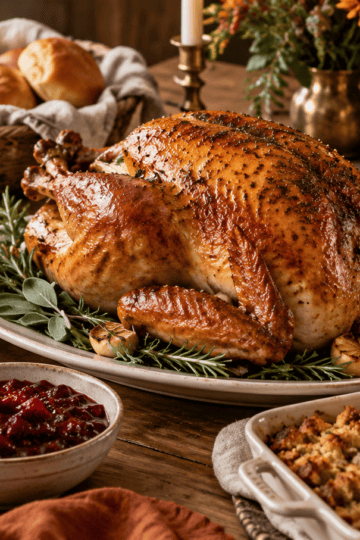
Carve the turkey at the table or in the kitchen, whichever suits your family. Serve it with gravy, cranberry sauce, and your favorite sides.
This dry-brined turkey is a clean, seasoned canvas, which means it pairs well with whatever your family's table looks like, whether that is classic New England sides or dishes that reflect your own heritage. For ideas on building the full menu around it, see our Thanksgiving Menu: What to Cook and Why It Works.
Dry Brine Turkey

Equipment
- Large roasting pan with rack
- Instant-read thermometer
- Rimmed baking sheet with rack
Ingredients
Dry brine
- 1 whole turkey 12 to 14 pounds, fresh or fully thawed
- 3 to 3½ tablespoons Diamond Crystal kosher salt 1 tablespoon per 4 pounds of turkey; use about 2 tablespoons if using Morton kosher salt
- 1 tablespoon black pepper freshly ground
- 2 teaspoons dried thyme or 1 tablespoon chopped fresh thyme
- 1 teaspoon dried sage or 2 teaspoons chopped fresh sage
- 1 teaspoon garlic powder optional
For roasting
- 4 tablespoons unsalted butter softened
- 1 onion quartered
- 1 lemon or orange halved
- fresh herb sprigs thyme, sage, parsley
- 2 cups chicken or turkey stock for the roasting pan
Instructions
- Thaw. If frozen, thaw the turkey in the refrigerator, allowing about 24 hours for every 4 to 5 pounds. Do not thaw on the counter.
- Dry. Remove the neck and giblets. Pat the turkey thoroughly dry inside and out with paper towels.
- Salt. Mix the salt, pepper, thyme, sage, and garlic powder. Set the turkey on a rack over a rimmed baking sheet. Sprinkle about two thirds of the mixture over the breast, legs, wings, and back, and the rest in the cavity. Loosen the skin over the breast and thighs and rub some of the mixture directly onto the meat.
- Brine. Refrigerate the turkey uncovered for 48 to 72 hours (24 hours minimum). Do not rinse; just pat away any surface moisture.
- Prepare. Take the turkey out about an hour before roasting. Heat the oven to 425°F with a rack in the lower third. Rub the skin with the butter, fill the cavity loosely with the onion, citrus, and herbs, and tuck the wing tips. Set breast side up on a rack in the roasting pan and pour the stock into the pan.
- Roast. Roast at 425°F for 30 minutes, then reduce to 350°F and roast until the thickest part of the thigh reads 165°F and the breast reads 160°F to 165°F, about 2½ to 3¼ hours in total for a 12 to 14 pound bird. Tent the breast with foil if it browns too fast.
- Rest. Transfer to a carving board, tent loosely with foil, and rest 30 to 45 minutes before carving. Make gravy from the pan drippings while it rests.
Notes
Frequently Asked Questions
How long should I dry brine a turkey? Between 24 and 72 hours. 48 to 72 hours gives the best flavor and the crispiest skin.
Do I rinse a dry-brined turkey before roasting? No. Pat it dry and roast.
Can I dry brine a frozen turkey? Thaw it completely in the refrigerator first, then dry brine.
Can I dry brine a smaller or larger bird? Yes. Use the ratio of 1 tablespoon of Diamond Crystal kosher salt per 4 pounds of turkey, and adjust roasting time. Check the temperature early.
What if my turkey is pre-brined or kosher? Skip the salt, or use only the herbs and pepper, since the bird is already seasoned.
Do I need to baste? No. Opening the oven repeatedly lowers the temperature and slows browning. A dry-brined turkey stays juicy without it.
Cook with me every week
Seasonal recipes, holiday menus, and stories from my kitchen, plus first word on Holiday Bread and The Market's holiday orders. Free, straight to your inbox.


Comments
No Comments