
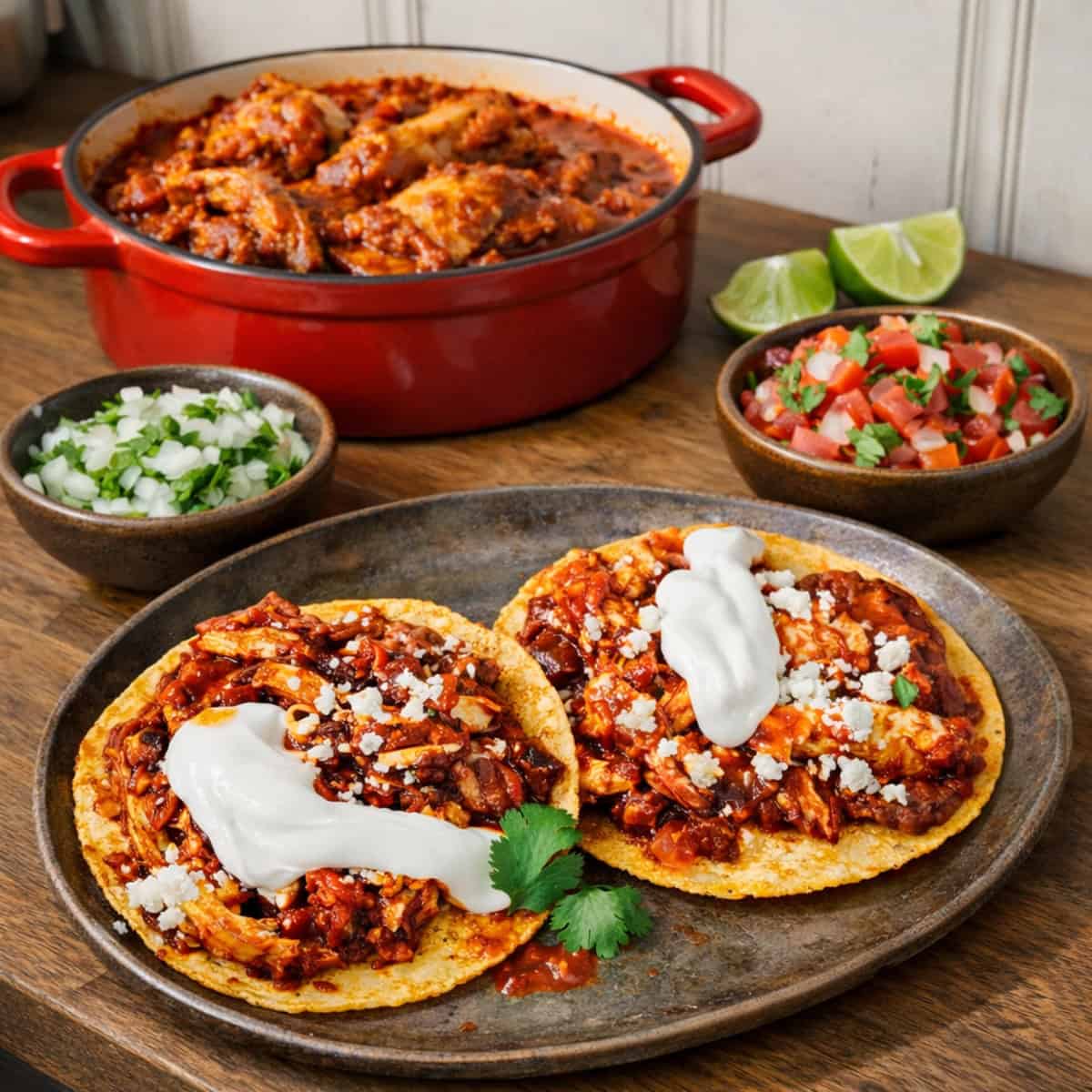
Tacos are not built to impress—they’re built to be eaten standing up, leaning over a counter, with something dripping down your wrist and no real interest in keeping things neat. They’re direct, assembled in the moment, and better for it.
Cinco de Mayo is a great excuse to build a full taco bar, with well-prepared proteins, structured salsas, and purposeful toppings.
The goal is not to serve everything. It’s to build a table that works.
A strong taco bar is not about volume—it’s about balance. Warm, rich proteins need contrast. Salsas should move from mild to hot, each bringing a different kind of flavor, not just more heat. Toppings aren’t decoration—they control texture, acidity, and finish.
When those elements are in place, the table takes care of itself.
Guests move through it naturally. Each taco builds differently. Nothing feels heavy, and nothing feels missing.
That’s the difference between a spread and a system.
Check out our list of Mexican Entertaining Essentials
How to Build the Menu
A well-built taco bar is structured, not scattered:
- Proteins that carry the meal
- Tortillas that are warm and ready
- Salsas that provide contrast and control heat
- Toppings that add texture, acidity, and finish
- One or two sides to support the table
Each element has a role. Nothing is there by accident.
The Taco and Salsa Bar Menu
Start — Ready to Serve
Set the table with something immediate:
- Guacamole
- A selection of salsas
- Warm tortilla chips or cut tortillas
This gives the table a starting point without requiring last-minute cooking.
Proteins — The Core of the Table
Choose two to three, each distinct:
- Pork al Pastor — seasoned with achiote paste, pineapple and vinegar
- Beef Birria — slow-cooked beef, crisped before serving
- Chicken Tinga — braised shredded chicken with tomato and chipotle
Optional:
- Black beans or roasted vegetables
Keep the selection tight. Execution matters more than variety.
Tortillas — The Foundation
- Corn tortillas (primary)
- Flour tortillas (optional)
Keep them warm, covered, and replenished in small batches.
Cold tortillas will undo everything else on the table.
Salsas — Built by Heat and Flavor
A strong salsa bar moves from mild to hot, with each one offering a distinct flavor profile—not just more heat.
- Mild (fresh and bright)
Tomato-based salsa or blended salsa fresca
→ light, balanced, accessible - Spicy (savory and roasted)
Salsa roja made with roasted tomatoes and chiles
→ deeper, more developed flavor - Hot (sharp and direct)
Chile-forward salsa such as chile de árbol or habanero
→ clean heat, used in small amounts
Each salsa should serve a purpose. Together, they give control over both flavor and intensity.
A good salsa bar isn’t about quantity—it’s about contrast and control.
Toppings — Clean and Purposeful
- Diced onion
- Fresh cilantro
- Lime wedges
- Radishes
- Queso fresco
- Crema
- Pico de gallo (fresh tomato, onion, lime)
- Curtido (lightly pickled cabbage slaw)
- Sweet onion relish with cilantro and lime
Salsas coat the taco. Toppings finish it.
Curtido adds acidity and crunch, cutting through richer meats.
The onion relish brings a softer, slightly sweet balance that rounds out heat and sharpness.
Sides — Keep It Focused
Choose one or two:
- Mexican rice
- Refried or whole black beans
These support the meal without competing with it.
How to Set the Table
Arrange the bar so it flows naturally:
- Plates
- Tortillas
- Proteins
- Salsas
- Toppings
- Sides
Guests should move through once, building as they go.
Why This Menu Works
This structure creates a table that feels complete without being overwhelming:
- Food is ready when guests arrive
- Proteins are prepared ahead and finished simply
- Salsas provide controlled variation
- Toppings add freshness, acidity, and texture
Each taco can be different, but the system stays consistent.
Check out our list of Mexican Entertaining Essentials