
What Is It
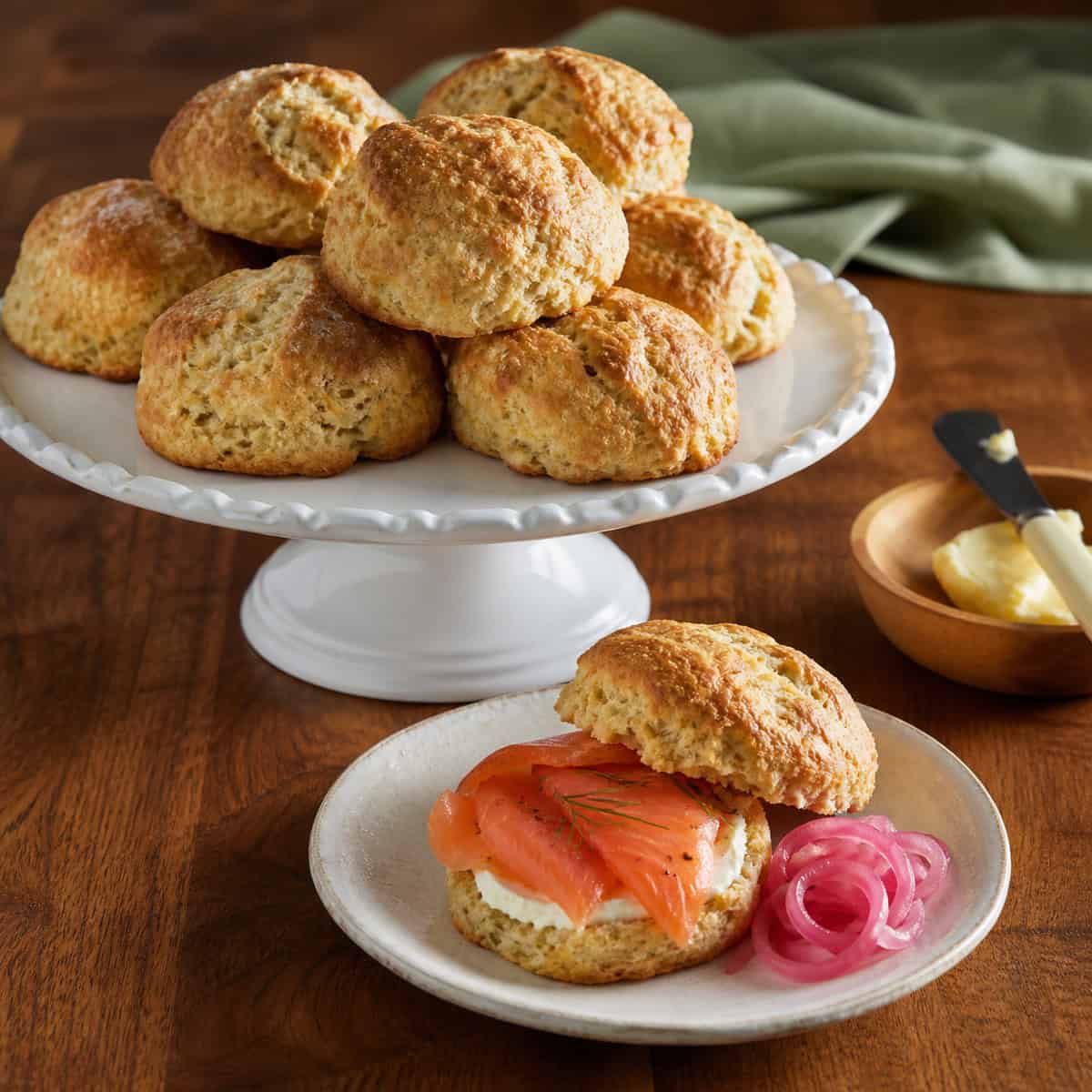
Irish brown soda scones are the quicker, more elegant cousin to traditional Irish brown soda bread—tender, lightly crumbly, warmly nutty, and built for butter, smoked salmon, preserves, or a good spoonful of clotted cream. Made without yeast, they rely on baking soda and cultured dairy for lift, giving you fresh-baked bread in under an hour.
For your Mother’s Day table, they hit exactly the right note: rustic enough to feel honest, polished enough to feel special, and sturdy enough to support your smoked salmon butter board beautifully.
Origin
Brown soda bread is woven into Irish home cooking, traditionally made with coarse wholemeal flour, baking soda, salt, and buttermilk. It was practical baking—quick to make, nourishing, and suited to the hearth ovens of country kitchens.
The scone version keeps that same earthy flavor and tender crumb, but in smaller rounds that feel more suited to brunch service. Split warm, buttered generously, and topped with smoked salmon or jam, they bridge breakfast bread and afternoon tea pastry.
Key Ingredients
The flour matters.
Irish brown bread traditionally uses coarse wholemeal flour, which gives nutty depth and a gently rustic crumb. American whole wheat flour works, but combining flours creates better texture.
Good: Whole wheat flour + all-purpose flour blend
Better: King Arthur Baking Company white whole wheat flour blended with all-purpose
Best: Irish-style stoneground wholemeal flour if you can source it
Buttermilk is essential. Its acidity reacts with baking soda, creating lift while adding tang.
Good: Cultured buttermilk
Better: Full-fat cultured buttermilk
Best: Local cultured buttermilk from a creamery if available
Butter should be rich and cold.
Good: Land O'Lakes
Better: Plugrá
Best: Kerrygold — naturally the best fit here
A little honey softens the earthiness and rounds the crumb beautifully.
Key Technique
This dough should be handled lightly.
Cold butter is cut into the flour until it forms small flakes and pebbles, much like biscuit dough. Once buttermilk is added, mix only until it comes together. Overworking develops gluten and toughens the crumb.
Patting rather than rolling keeps the interior tender.
A light egg wash gives a beautiful golden crust.
Key Equipment
A mixing bowl, pastry cutter (or fingertips), sheet tray, bench scraper, and pastry brush are all you need.
No mixer. No proofing basket. No waiting around.
Simple baking, exactly as intended.
Basic Preparation Outline
Whole grain flour, white flour, salt, baking soda, and a touch of baking powder are whisked together, then cold butter is worked in until crumbly. Buttermilk and honey are folded in gently until the dough just holds.
The dough is patted into a round, cut into wedges or stamped into rounds, brushed with egg wash, and baked until deeply golden.
Warm from the oven, they split beautifully.
How to Enjoy
Serve warm with cultured butter, smoked salmon, lemon-chive cream cheese, berry preserves, or honey.
For Mother’s Day, they belong alongside your smoked salmon butter board, where guests can build their own perfect bite.
That’s hospitality.
Variations
Fold in oats for heartier texture, orange zest for brightness, currants for sweetness, or chopped herbs for a savory brunch version.
Cheddar and chive is excellent if serving alongside quiche.
Storage
Best the day they’re baked, but excellent refreshed in a warm oven.
Freeze beautifully.
Split before freezing, then toast lightly and butter generously.
Comments
No Comments