
By Chef Samantha Tilley, executive chef at The Market CT and former chef-owner of Mockingbird Kitchen & Bar.
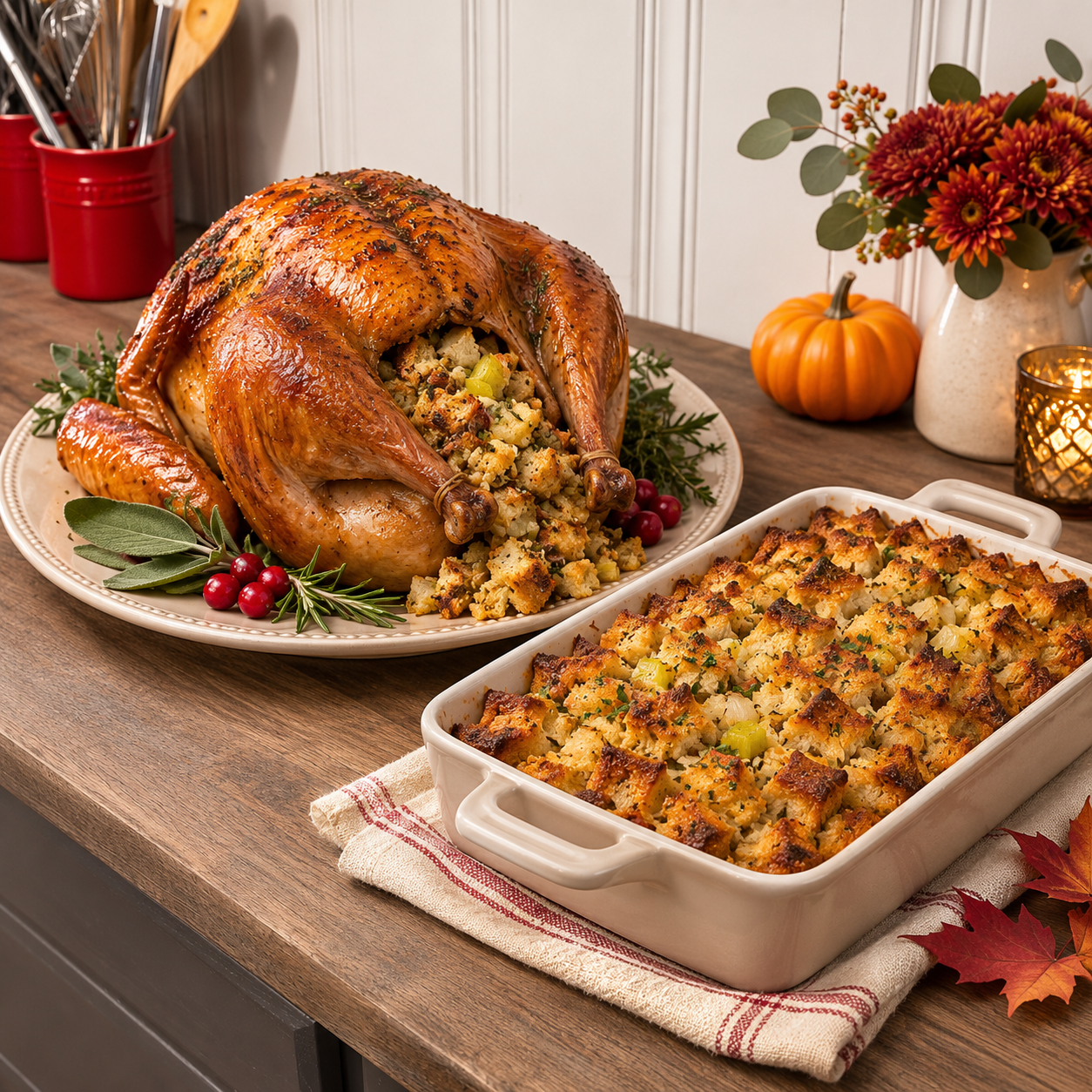
Ask a table of Thanksgiving guests whether it's called stuffing or dressing and you'll learn where everyone grew up. The dish is the same idea everywhere: bread, aromatics, fat, stock, and herbs, cooked until crisp on top and soft in the middle. What changes is the name, the bread, and whether it ever goes inside the bird.
In my family, we made both versions and called it all stuffing. Some went into the bird, and the rest went into a casserole dish. Everyone had a favorite: the soft, rich stuffing from inside the turkey, or the crisp-edged one from the dish.
The Short Answer
- Stuffing is cooked inside the turkey.
- Dressing is baked separately, in a dish.
That's the technical difference. In practice, most people use whichever word they grew up with, no matter how it's cooked. In the South, it's almost always dressing. In the Northeast and much of the Midwest, it's stuffing, even when it never sees the inside of a turkey. In parts of Pennsylvania, you'll hear it called filling.
In the Bird or in a Dish?
Stuffing cooked inside the bird absorbs the turkey's juices, and that flavor is real. But it comes at a cost:
- Food safety: the stuffing in the center of the cavity has to reach 165°F to be safe, and by the time it does, the breast meat is usually overcooked.
- Texture: stuffing inside the bird steams. It's soft all the way through, with none of the crisp, browned top that makes dressing worth fighting over.
- Timing: a stuffed turkey takes longer to roast and is harder to cook evenly.
Baking it in a dish solves all three, and doing both, the way my family did, gives you the best of each. If some goes in the bird, stuff it loosely and check the center with a thermometer: it must reach 165°F before the turkey comes out. For the dish, get that turkey flavor by moistening it with stock made from the neck and giblets, or spooning pan drippings over it for the last few minutes in the oven. My Dry Brine Turkey is roasted with just aromatics in the cavity, so it cooks evenly.
The Regional Styles
Every region builds its version from the bread and the ingredients close at hand.
- Classic bread stuffing (Northeast and Midwest): white or country bread, onion, celery, butter, sage, and thyme. The one most people picture.
- Cornbread dressing (the South): crumbled, unsweetened cornbread, often mixed with some white bread or biscuits, with onion, celery, sage, and plenty of stock. Start with a skillet of Old Fashioned Southern Cornbread.
- Oyster stuffing (New England and the Mid-Atlantic): a coastal tradition that goes back generations. Try my New England Oyster Stuffing.
- Sausage stuffing: browned sausage adds fat and seasoning. Italian-American families often add fennel and chestnuts; see my Italian-American Thanksgiving Menu.
- Wild rice stuffing (the Upper Midwest): nutty wild rice with mushrooms and herbs, a nod to the region's native grain.
For more ideas from around the world, see Stuffing Ideas That Transport Your Thanksgiving Table.
Technique Intelligence
Technique: Stuffing & Dressing · Chapter 32 · Technique School
This is the framework I build every version on. Swap the bread, add sausage or oysters, change the herbs, and the method stays the same. The full recipe is in the card below.
Dry the bread
Dry bread soaks up stock and stays in pieces. Fresh bread turns to paste. Leave the cubes out overnight or toast them low and slow at 275°F until they're dry all the way through but not browned.
Cook the vegetables until soft
Give the onion and celery a full 10 minutes in butter. Raw, crunchy celery in finished stuffing is the giveaway of a rushed job. Season the vegetables well; this is where most of the flavor comes from.
Add stock a little at a time
Moist, not soggy. Whisk the eggs into the first 3 cups of stock, toss, and squeeze a handful: it should hold together without dripping. Add the last cup only if it needs it. You can always add stock; you can't take it out.
Cover, then uncover
Bake covered first so the center heats through and sets, then uncover so the top dries and crisps. Those crunchy, buttery edges are what everyone fights over. Cook it to 165°F in the center, especially if it has eggs or meat.
Ingredient Intelligence
Bread
Use a sturdy loaf with real structure: country bread, a good Italian loaf, challah or brioche for a richer stuffing. Soft sandwich bread falls apart. For Southern dressing, use unsweetened cornbread, often mixed with some white bread or biscuits.
Stock
Homemade turkey stock, simmered from the neck and wings, gives dressing the flavor of stuffing cooked in the bird without the food-safety problem. Good store-bought low-sodium stock works; season to taste.
Herbs
Fresh sage is the smell of Thanksgiving. Use it generously, with thyme for depth and parsley for freshness. If you only have dried, use about one-third as much.
Butter
Unsalted, so you control the salt. I use Kerrygold or Plugrá.
Make It Ahead
Dry the bread up to three days ahead and keep it in a paper bag. Cook the vegetables the day before and refrigerate. On Thanksgiving morning, mix everything, then bake while the turkey rests. A 30- to 45-minute rest for the turkey is exactly how long the dressing needs in the oven.
What to Pour with Stuffing or Dressing
Whatever you call it, sage, thyme and butter want an earthy, medium-bodied red. Pinot Noir is the classic match. If your version has sausage, pour a Côtes du Rhône; for oyster stuffing, a white Burgundy or Chenin Blanc; for Southern cornbread dressing, a Beaujolais. For every dish on the table, see What Wine to Serve with Thanksgiving Dinner on Food and Wine Discoveries.
Or Let Us Make It
This year, The Market in Bantam is making three stuffings for your Thanksgiving table:
- Apple, Apricot & Pecan (vegetarian): fresh apples, dried apricots, toasted pecans, and sage, moistened with apple juice. Sweet, nutty, and meat-free.
- Sausage, Sage & Thyme: savory sausage with fresh herbs, hearty and classic.
- Cornbread: a Southern-style stuffing, crisp on top and tender inside.
Dressing vs Stuffing FAQ
Is stuffing the same as dressing? Yes, in everything but where it's cooked. Stuffing goes inside the bird; dressing bakes in a dish. Most families use one word for both.
Is it safe to cook stuffing inside the turkey? It can be, but the center of the stuffing must reach 165°F, which usually overcooks the breast. Baking it separately is safer and more reliable.
Why is my stuffing soggy? The bread wasn't dry enough, or there was too much stock. Dry the cubes thoroughly and add stock gradually.
Can I make dressing the day before? Yes. Assemble it, refrigerate covered, and add 10 to 15 minutes to the covered baking time. Or bake it fully, refrigerate, and reheat covered at 350°F with a splash of stock.
Building the rest of the menu? Start with Thanksgiving Menu: What to Cook and Why It Works.
Classic Bread Stuffing (Chef's Base Recipe)

Equipment
- Rimmed sheet pans
- 9 x 13-inch baking dish
- Aluminum foil
Ingredients
- 1½ pounds sturdy bread cut into ¾-inch cubes, about 14 cups
- 8 tablespoons unsalted butter 1 stick, plus more for the dish
- 2 medium onions diced
- 4 celery ribs diced
- 2 tablespoons chopped fresh sage
- 1 tablespoon fresh thyme leaves
- ¼ cup chopped flat-leaf parsley
- 3 to 4 cups turkey or chicken stock
- 2 large eggs
- 1½ teaspoons kosher salt plus more to taste
- ½ teaspoon black pepper
Instructions
- Dry the bread: Spread 1½ pounds bread cubes on sheet pans and leave them out overnight, or toast at 275°F for 30 to 40 minutes, until dry but not browned.
- Cook the vegetables: Melt 8 tablespoons butter in a large skillet over medium heat. Add 2 diced onions and 4 diced celery ribs and cook until soft, about 10 minutes. Stir in 2 tablespoons sage, 1 tablespoon thyme, ¼ cup parsley, 1½ teaspoons kosher salt and ½ teaspoon pepper.
- Mix: Toss the bread with the vegetables in a large bowl. Whisk 2 eggs into 3 cups stock and pour over the bread, tossing gently. Add up to 1 more cup stock, a little at a time, until the bread is moist but not soggy.
- Bake covered: Heat the oven to 350°F. Butter a 9 x 13-inch baking dish, spread the stuffing in it and cover with foil. Bake 30 minutes.
- Bake uncovered: Uncover and bake 25 to 30 minutes more, until the top is golden and crisp and the center reaches 165°F.
Notes
Made it? Leave a star rating and a comment below: stuffing or dressing, and what bread does your family use? I read every comment.
Cook with me every week
Seasonal recipes, holiday menus, and stories from my kitchen, plus first word on Holiday Bread and The Market's holiday orders. Free, straight to your inbox.

Comments
No Comments