
By Chef Samantha Tilley, executive chef at The Market CT and former chef-owner of Mockingbird Kitchen & Bar.
Cooks have been binding chopped meat with bread for a very long time. A Roman cookbook attributed to Apicius has minced-meat dishes held together with soaked bread, and northern Europe has its own loaves, like German Hackbraten and Dutch gehaktbrood. Classic American meatloaf took shape in the late 1800s, after hand-cranked meat grinders made ground meat cheap and easy, and recipes for it were showing up in American cookbooks by the end of that century. Food historians differ on the details, but the broad story is plain: meatloaf became a fixture during the Great Depression, when a pound of beef stretched with crackers, oats or bread fed a whole family, and again under World War II rationing. The sweet tomato glaze became standard by the middle of the twentieth century, and it has never left.
Meatloaf exists to make ground meat behave. Done right, it stays moist, slices cleanly and reheats without falling apart. Done wrong, it is a dry brick or a crumbly mess, and the difference is technique, not luck. Too little structure and it falls apart; too much mixing and it turns dense and bouncy. This recipe is built on binding and moisture control: a soaked-breadcrumb panade, gentle hands and a thermometer. The goal is cohesion, not density.
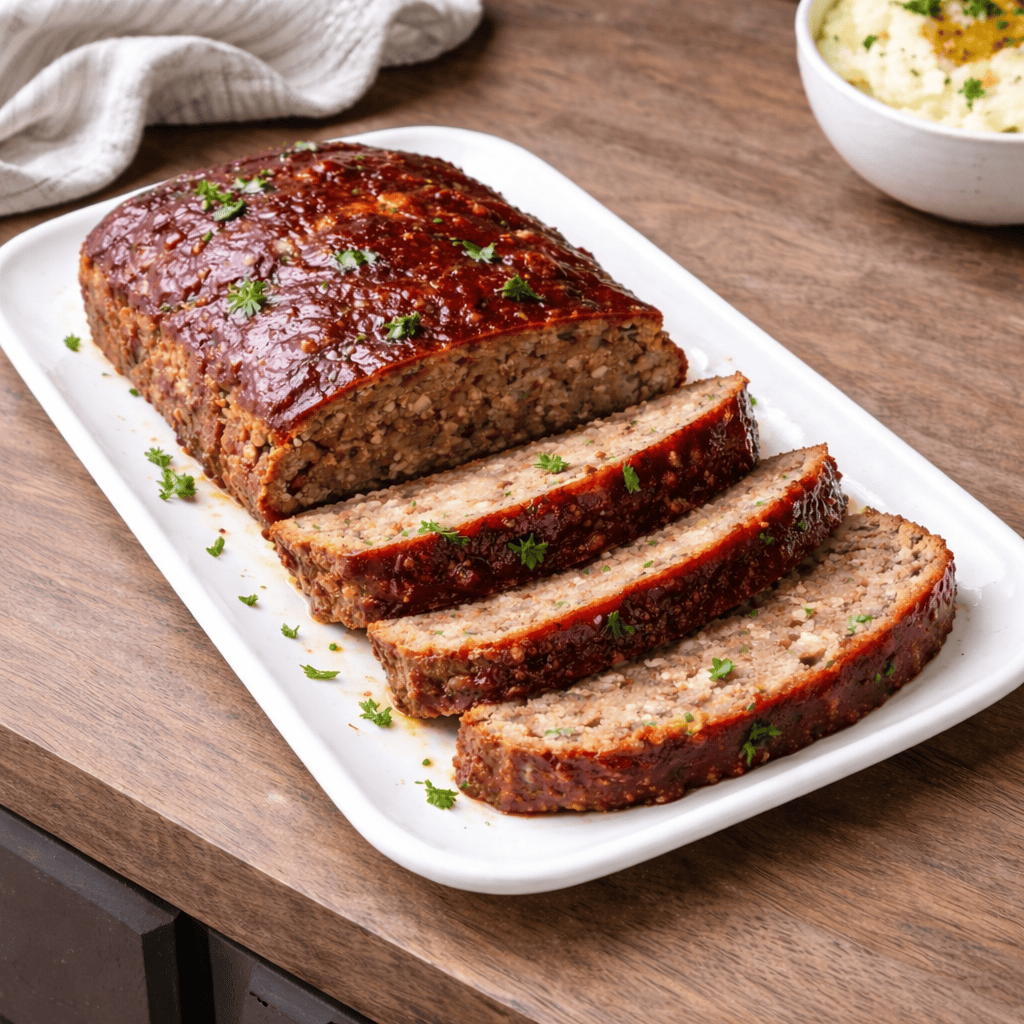
Then it comes out of the oven, the glaze bubbling and sticky at the edges, and the kitchen smells like caramelized ketchup and browned beef. Let it rest. Cut thick slices onto plates next to a pile of mashed potatoes and green beans, and pass the extra glaze. Nobody needs to be told it is good. And whatever is left becomes tomorrow's best sandwich.
Technique Intelligence
Technique: Roast · Chapter 17 · Technique School
Make a panade
Soak the panko in the milk for 3 to 5 minutes, until it is fully absorbed. Don't skip it. The soaked crumbs hold on to moisture as the meat proteins tighten in the oven, so the loaf stays juicy and tender instead of shrinking into a dry, tight block. It should look like soft, wet oatmeal before the meat goes in.
Season the binder, not the meat
Stir the onion, garlic, eggs, Worcestershire, ketchup, mustard and seasonings into the panade before the beef goes in. Everything gets evenly distributed in the wet mix first, so you can mix the meat less later. Want to check the seasoning? Fry a teaspoon of the finished mix in a skillet and taste that. Never taste raw ground meat.
Mix gently, and stop early
Use your hands. Mix just until the meat and panade come together, then stop. Overworked ground meat turns tight, springy and rubbery. You should still see a loose, shaggy texture, not a smooth paste.
Free-form on a sheet pan
Shape the loaf about 8 to 9 inches long and 2½ to 3 inches tall on a sheet pan lined with parchment or foil. A loaf pan traps fat and steam, so the meatloaf simmers in its own juices and the sides never brown. On a sheet pan the fat runs off, the hot air reaches every side, and you get browned, crusty edges all the way around. A loaf pan still works if you want perfectly even slices; just expect a softer crust.
Glaze partway through
Bake at 375°F for 35 minutes first, then brush on a generous layer of glaze and bake 20 to 30 minutes more. Glaze too early and the sugar scorches or slides off a wet surface. Glaze at the halfway mark and it sets into a sticky, lacquered top.
Cook to 160°F
Ground meat must reach 160°F in the center, the USDA safe temperature. Color is not a reliable test. Push an instant-read thermometer into the thickest part of the loaf and pull it when it reads 160°F. It is the only tool this recipe really needs.
Rest before slicing
Rest the meatloaf 10 to 15 minutes. Cut it straight from the oven and the juices run onto the board and the slices crumble. After a rest, the loaf firms up and slices cleanly, each piece glossy on top and moist in the middle. Use a serrated knife and a gentle sawing motion.
Ingredient Intelligence
Each ingredient supports texture first, flavor second.
Ground beef
80/20 ground beef. The fat keeps the loaf moist and carries flavor, and most of the excess renders off on the sheet pan. 85/15 works if you want it a little leaner; go leaner than 90/10 and the loaf turns dry and crumbly. For more richness, use 1 pound of beef and ½ pound of ground pork. Beef-only meatloaf slices more cleanly; the beef and pork blend is softer and richer.
Panko or fresh breadcrumbs
Panko absorbs milk evenly and keeps the texture light. Fresh breadcrumbs from a few slices of sandwich bread, crusts removed, work just as well. Crushed saltine crackers or quick-cooking oats are the old Depression-era stand-ins and still make a good loaf. For gluten-free meatloaf, use gluten-free panko or quick oats certified gluten-free.
Milk
Whole milk softens the crumb and keeps the loaf from turning dry. Buttermilk adds a gentle tang. For dairy-free, use unsweetened plain oat milk or beef broth.
Eggs
Two large eggs hold the loaf together so it slices without falling apart. Don't add more; extra egg makes the texture spongy.
Onion and garlic
Mince the onion fine. Big pieces stay crunchy and break the loaf apart when you slice it. A small yellow onion gives about ¾ cup, which adds flavor and moisture from the inside. Grate it on a box grater if you want it to disappear completely.
Worcestershire, ketchup and Dijon
These three season the meat from the inside: savory depth from the Worcestershire, sweetness and acidity from the ketchup, a little sharpness from the mustard. Lea & Perrins is the classic Worcestershire, Heinz the classic ketchup, and Grey Poupon or Maille a reliable Dijon.
Salt and spices
Kosher salt seasons the meat and helps firm its structure. If you only have table salt, use ¾ teaspoon, since it is saltier by volume. Smoked paprika is optional but adds a gentle smokiness, and fresh parsley brightens the loaf.
The glaze
Ketchup, brown sugar, apple cider vinegar and a splash of Worcestershire. The vinegar keeps it from tasting like candy. Light or dark brown sugar both work; dark gives a deeper molasses note. Make a double batch if you like extra glaze to pass at the table.
Variations
- Softer onions: Cook the minced onion in 1 tablespoon of butter over medium heat until soft and sweet, about 5 minutes, and cool before adding. I use Kerrygold or Plugrá.
- Italian sausage blend: Replace the ½ pound of pork with bulk Italian sausage. I buy mine from a local Italian butcher; Johnsonville is a good store-bought choice. Cook to 160°F.
- Bacon-wrapped: Drape thin bacon slices over the loaf before baking, skip the first glaze, and brush the glaze on for the last 15 minutes.
- Barbecue glaze: Swap the ketchup glaze for your favorite barbecue sauce.
- Turkey meatloaf: Use ground turkey (93/7, not extra-lean) and cook to 165°F, the safe temperature for poultry.
- Mini meatloaves: Shape into 6 small loaves and bake at 375°F for about 20 minutes, glaze, then bake about 10 minutes more, until they reach 160°F.
Make Ahead, Storage and Freezing
Meatloaf is designed to be made ahead, and it tastes even better the next day.
Make ahead: Shape the unbaked loaf, cover and refrigerate up to 24 hours. Keep the glaze in a separate covered container. Add a few minutes to the first bake if the loaf goes in cold.
Storage: Wrap cooked meatloaf well and refrigerate up to 4 days.
Freezing: Freeze the shaped, unbaked loaf, tightly wrapped, up to 2 months; thaw overnight in the refrigerator and bake as directed. Or cool the baked meatloaf completely, slice it, wrap the slices individually, and vacuum seal or bag them. Cooked meatloaf keeps up to 3 months frozen.
Reheating: Reheat gently to keep it moist. Warm slices, covered with foil, with a splash of water in a 325°F oven for 15 to 20 minutes. Or sear slices in a little butter in a skillet until crisp and browned on both sides, the best way to eat leftover meatloaf, on a sandwich with extra glaze.
What to Serve with Meatloaf
Keep the plate familiar and balanced: something creamy, something green.
- Mashed potatoes or buttered egg noodles, or Colcannon (Irish Mashed Potatoes with Kale and Scallions)
- Green Beans Almondine or a simple green salad
- Green Bean Casserole for a full comfort-food dinner
- Honey Roasted Rainbow Carrots
- Mac and Cheese
- Buttermilk Biscuits to mop up the glaze
- American Deli Style Vinegar Slaw to cut the richness
Wine pairing
Meatloaf is rich, savory and familiar. The wine should feel like part of the table, not a statement. A medium-bodied red with good acidity works best: Merlot or a restrained Cabernet Franc has enough structure for the beef without overwhelming the dish's softness and sweetness. For something more rustic, a moderate, not overly ripe Zinfandel pairs naturally with the tomato glaze and caramelized edges. For a lighter option, Pinot Noir works well, especially when the meatloaf leans herbaceous rather than heavily sauced. Avoid heavily oaked or high-alcohol wines. Meatloaf rewards balance and comfort, not intensity.
Meatloaf FAQ
What temperature should meatloaf be cooked to?
160°F in the center for beef or pork meatloaf, and 165°F for turkey or chicken meatloaf. Check with an instant-read thermometer in the thickest part.
How long does meatloaf take to bake at 375°F?
A 1½-pound free-form meatloaf takes about 55 to 65 minutes at 375°F: 35 minutes, then 20 to 30 minutes more after glazing. Always go by internal temperature, not time.
Why does my meatloaf fall apart?
Usually not enough binder, onion pieces that are too large, or slicing it too soon. Use the panade and both eggs, mince the onion finely, and rest the meatloaf 10 to 15 minutes before cutting.
Why is my meatloaf dry or tough?
Beef that is too lean, no panade, overmixing or overbaking. Use 80/20 beef, soak the breadcrumbs in milk, mix only until combined and take it out at 160°F.
Should I cover meatloaf while it bakes?
No. Bake it uncovered so the outside browns and the glaze sets.
Is it better to bake meatloaf in a loaf pan or on a sheet pan?
A sheet pan gives better browning because fat and steam can escape. A loaf pan gives more even slices but a softer, paler crust.
Can I freeze meatloaf?
Yes. Freeze a shaped, unbaked loaf up to 2 months, or cooked slices up to 3 months. Thaw in the refrigerator overnight.
Classic American Meatloaf (Juicy, Glazed, and Built to Work)

Equipment
- 9 × 5-inch loaf pan or rimmed sheet pan
Ingredients
Meatloaf
- 1½ lb 80/20 ground beef or 1 lb beef + ½ lb pork
- 1 cup panko breadcrumbs or fresh breadcrumbs
- ½ cup milk or buttermilk
- 1 small yellow onion finely minced (about ¾ cup)
- 2 cloves garlic minced
- 2 large eggs
- 2 tablespoon Worcestershire sauce
- 2 tablespoon ketchup
- 1 tablespoon Dijon mustard
- 1 teaspoon kosher salt
- 1 teaspoon black pepper
- 1 teaspoon smoked paprika optional but good
- 1 tablespoon chopped parsley optional
Glaze
- ½ cup ketchup
- 2 tablespoon brown sugar
- 1 tablespoon apple cider vinegar
- 1 teaspoon Worcestershire sauce
- ½ teaspoon garlic powder optional
Instructions
Meatloaf
- Preheat: Heat oven to 375°F.
- Set the pan: Line a sheet pan with parchment or foil. (You can also use a loaf pan, but free-form bakes better and doesn't steam itself.)
- Make the panade (tenderness insurance): In a bowl, combine 1 cup panko breadcrumbs and ½ cup milk. Let sit 3 to 5 minutes, until absorbed.
- Add the flavorings: Add 1 small yellow onion, finely minced (about ¾ cup), 2 cloves minced garlic, 2 large eggs, 2 tablespoons Worcestershire sauce, 2 tablespoons ketchup, 1 tablespoon Dijon mustard, 1 teaspoon kosher salt, 1 teaspoon black pepper, 1 teaspoon smoked paprika, and 1 tablespoon chopped parsley to the panade. Stir to combine.
- Add the meat: Add 1½ pounds 80/20 ground beef (or 1 pound beef and ½ pound pork) and mix gently with your hands just until cohesive, no more. Mix gently; overworking makes it dense.
- Shape: Form into a loaf about 8 to 9 inches long and 2½ to 3 inches tall on the prepared pan.
- First bake: Bake 35 minutes.
Glaze and finish
- Make the glaze: Stir together ½ cup ketchup, 2 tablespoons brown sugar, 1 tablespoon apple cider vinegar, 1 teaspoon Worcestershire sauce, and ½ teaspoon garlic powder, if using.
- Glaze the loaf: Brush a generous layer over the loaf.
- Finish baking: Bake 20 to 30 minutes more, until the internal temperature reaches 160°F.
- Rest (mandatory): Rest 10 to 15 minutes before slicing so juices redistribute.
Notes
Made this? Leave a star rating and a comment below: did you go with all beef or the beef and pork blend? I read every comment.
Comments
No Comments