
By Chef Samantha Tilley, executive chef at The Market CT and former chef-owner of Mockingbird Kitchen & Bar.
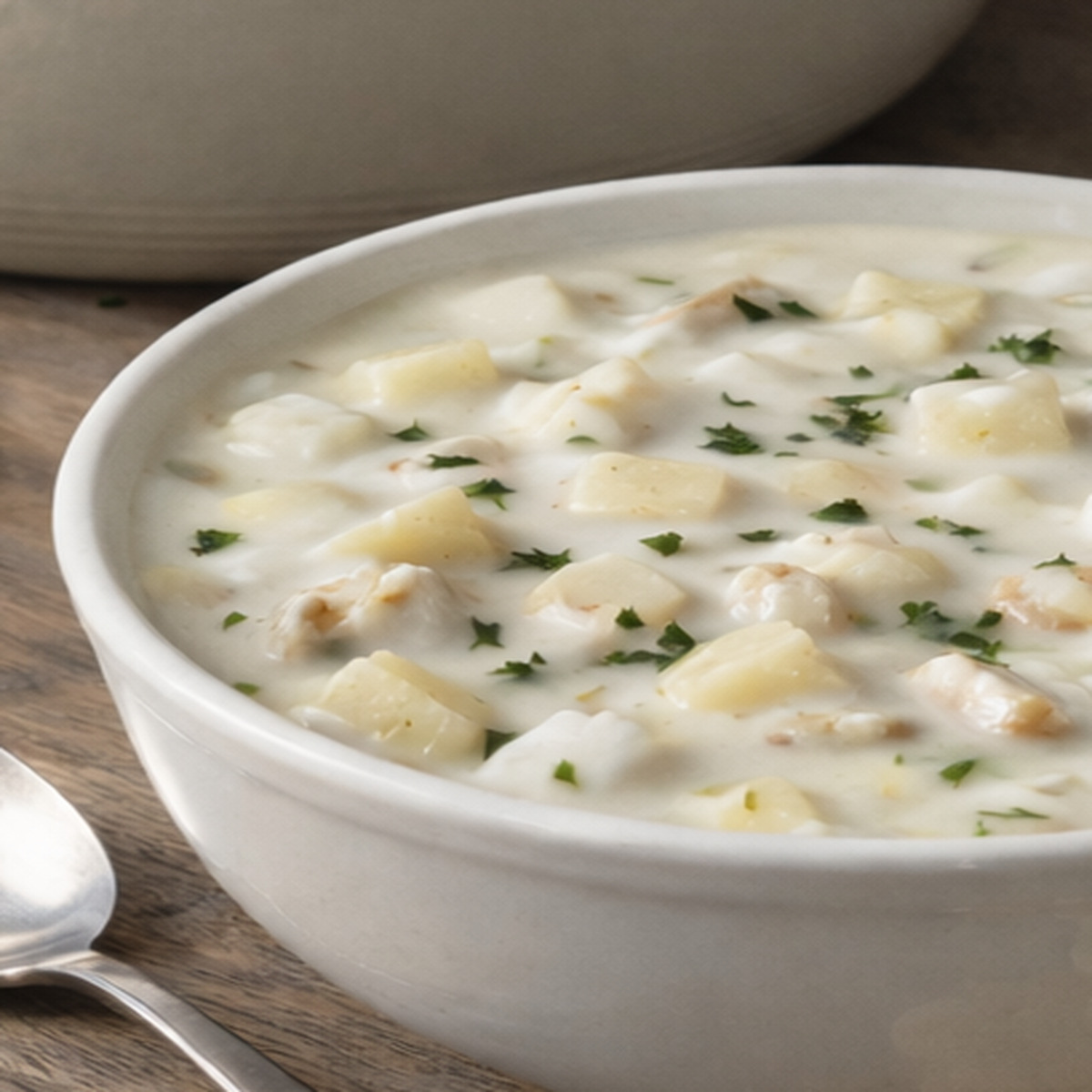
New England clam chowder is built on restraint: clams, potatoes, dairy and time. The word chowder most likely comes from the French chaudière, the big pot that French and Breton fishermen cooked their catch in along the North Atlantic coast. By the 1700s, New Englanders were layering salt pork, ship's biscuit and fish in iron pots, and by the 1800s clams had taken over. Herman Melville gave a whole chapter of Moby-Dick to the clam chowder at a Nantucket inn. It is one of three regional chowders along the Northeast coast, and the most dairy-forward of the group.
Clam chowder exists because it feeds people well in cold weather. It's practical coastal cooking, made from shellfish, storage vegetables and dairy, meant to be cooked in quantity and eaten slowly. When it's right, you taste the clams first, the broth second and the cream last. Anything louder misses the point. That balance comes from technique: gentle heat, potatoes for body instead of flour, and cream added at the very end.
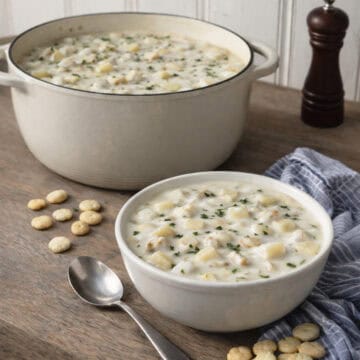
A raw day, the windows fogged, a pot barely trembling on the back burner. The kitchen smells of butter, onion and the sea. You ladle it into wide bowls, scatter oyster crackers over the top and hear them crackle as they soften. Take your time. That's what chowder is for.
Technique Intelligence
Technique: Stocks, Broths & Soups · Chapters 12 and 14 · Technique School
Purge the Clams, Then Steam Them Gently
Scrub the shells. Soak the clams in cold, salted water for 20 to 30 minutes so they spit out their sand. Then steam them with a splash of water over medium heat just until they open, 6 to 8 minutes. Pull each one as it opens. Discard any that stay shut. Overcooked clams turn to rubber, and they will cook again in the soup.
Strain the Liquor Twice If You Need To
The clam liquor is the soul of the chowder: briny, sweet and full of flavor. It's also where the grit hides. Pour it through a fine-mesh strainer lined with a paper towel or coffee filter, and leave the last tablespoon or two in the pot. One sandy spoonful ruins a bowl.
Soften the Onions. Don't Brown Them.
Melt the butter over medium-low heat and let the onion and celery go soft and translucent, 5 to 7 minutes. No color. Browned onions add a roasted sweetness that fights the clean taste of the clams. You want them to smell sweet and buttery, not toasty.
Let the Potatoes Do the Thickening
No roux, no flour. Simmer the diced potatoes in the clam liquor until just tender. They release starch as they cook, and that starch gives the chowder body. Want it thicker? Press a few potato cubes against the side of the pot with a spoon and stir them back in. Don't overwork them or the soup turns gummy.
Dairy Goes In Last, Over Low Heat
Lower the heat before the milk and cream go in. Warm them gently. Never boil. Boiling after the cream goes in can break the dairy and leave the soup grainy. Add the chopped clams at the very end, just long enough to heat through.
Rest Before You Serve
Pull the bay leaf, taste for salt and let the pot sit off the heat for 5 minutes. The broth thickens and the flavors settle. Chowder is always better after a short rest, and even better the next day.
What Can Go Wrong
- Rubbery clams: overcooked during steaming, or added to the soup too early.
- Broken dairy: the heat was too high after the cream went in.
- Gummy texture: flour, or potatoes stirred too hard.
- Flat flavor: weak clam liquor or not enough salt.
Ingredient Intelligence
Clams
Use hard-shell clams: littlenecks or cherrystones are sweet and easy to find, and big quahogs are the traditional chowder clam. Buy them alive, with tightly closed shells or shells that close when you tap them, and a clean smell of seawater. Cook them the day you buy them.
Substitute: canned chopped clams with bottled clam juice. Snow's or Bar Harbor are the ones to buy. The chowder is a little less sweet, but it's very good and ready in half the time.
Potatoes
Yukon Golds. They hold their shape but still release enough starch to thicken the broth, and they taste buttery. Russets break down into mush. Red potatoes work but thicken less.
Butter and Dairy
Unsalted butter, so you control the salt; the clam liquor brings plenty. Kerrygold or Plugrá give the base a rich, round flavor. Use whole milk and heavy cream. Lower-fat dairy is more likely to curdle and makes a thin, watery chowder.
Onion, Celery, Bay and Pepper
One onion, finely diced. Celery is optional and adds a fresh, green note. One bay leaf. White pepper keeps the chowder pale and clean-looking; black pepper is fine if that's what you have.
Bacon or Salt Pork (Optional)
Old New England chowders started with salt pork. If you want that smoky depth, render 2 ounces of diced bacon or salt pork first, cook the onions in the fat with a little less butter, and scatter the crisp bits on top. Keep it a background note, never the main flavor.
Variations
Clam chowder in the Northeast isn't one soup. It's regional, and the differences matter.
- Rhode Island clam chowder: no dairy at all. Clear, briny and clam-forward, closer to a broth than a soup.
- Manhattan clam chowder: tomatoes bring acidity and body for a brighter, leaner soup.
- Corn and clam chowder: stir in 1 cup of fresh or frozen corn kernels with the potatoes in late summer.
- Bread bowls: serve it in hollowed-out sourdough rounds, the way they do on the Boston and San Francisco waterfronts.
- Fish chowder: the older New England chowder. Swap the clams for 1½ pounds of cod or haddock and use fish stock.
Make Ahead, Storage and Freezing
Make ahead: Chowder tastes even better the next day. Make it up to 1 day ahead, cool it quickly and refrigerate. You can also steam and chop the clams and strain the liquor up to 1 day ahead and keep them covered in the fridge.
Storage: Refrigerate in an airtight container for up to 2 days. Reheat gently over low heat, stirring often. Do not boil. Add a splash of milk if it has thickened too much.
Freezing: Not recommended. Dairy separates and potatoes turn grainy when thawed.
What to Serve with New England Clam Chowder
- Oyster crackers are traditional. Good, crusty bread is better.
- Savory Irish Soda Bread with Cheddar and Spring Onions or Buttermilk Biscuits for dunking.
- American Deli Style Vinegar Slaw for something sharp and crunchy beside the cream.
- Wine: a dry Sauvignon Blanc or Albariño cuts through the cream and echoes the sea. An unoaked Chardonnay works if you want something rounder. Skip heavily oaked or high-alcohol whites; the soup is subtle, and the wine should be too.
New England Clam Chowder FAQ
What is the difference between New England and Manhattan clam chowder?
New England clam chowder is made with milk and cream. Manhattan clam chowder uses a tomato broth and has no dairy. Rhode Island clam chowder is a clear broth with no dairy or tomatoes.
How do you thicken clam chowder without flour?
Use Yukon Gold potatoes. Their starch thickens the broth as they simmer. For a thicker chowder, mash a few cubes against the side of the pot and let it rest 5 minutes before serving.
Can I use canned clams?
Yes. Use three 6.5-ounce cans of chopped clams, drained, and 1½ cups of bottled clam juice. Add the clams at the end and heat for 1 to 2 minutes.
Why did my clam chowder curdle?
The heat was too high after the milk and cream were added. Keep the chowder below a simmer once the dairy goes in and never let it boil.
How do I get the sand out of clams?
Scrub the shells and soak the clams in cold salted water for 20 to 30 minutes. After steaming, strain the liquid through a fine-mesh strainer lined with a paper towel or coffee filter.
Can you freeze clam chowder?
It's not recommended. The dairy separates and the potatoes turn grainy. Refrigerate it for up to 2 days instead.
New England Clam Chowder

Equipment
- Slotted spoon
- Fine-mesh strainer
Ingredients
Option 1: Fresh Clams (Preferred)
Shellfish
- 3 lb fresh clams scrubbed
- 1 cup reserved clam liquor from steaming
Aromatics and Fat
- 3 tablespoon unsalted butter
- 1 medium onion finely diced
- 1 celery stalk finely diced (optional)
Body
- 1½ lb Yukon Gold potatoes peeled and diced (½-inch)
Dairy
- 1½ cups whole milk
- 1 cup heavy cream
Seasoning
- 1 bay leaf
- ¾ teaspoon kosher salt adjust to taste
- ¼ teaspoon white or black pepper
Option 2: Canned Clams (all other ingredients stay the same)
- 3 cans chopped clams 6.5 ounces each, drained; Snow’s or Bar Harbor recommended
- 1½ cups bottled clam juice
Instructions
- Purge fresh clams (if using): Scrub the clams and soak them in cold salted water (about 2 tablespoons salt per quart) for 20 to 30 minutes so they spit out sand. Lift them out; leave the grit behind.
Method using fresh clams
- Steam the clams: Place the fresh clams in a large pot with ½ cup water. Cover and steam over medium heat until the clams open, 6 to 8 minutes. Remove the clams and discard any that did not open.
- Strain the liquor: Strain the cooking liquid through a fine-mesh strainer and reserve 1 cup clam liquor.
- Chop the clams: Chop the clams into bite-size pieces and set aside.
- Soften the aromatics: In the same pot, melt 3 tablespoon unsalted butter over medium-low heat. Add the onion and celery (if using). Cook until softened and translucent, 5 to 7 minutes. Do not brown.
- Simmer the potatoes: Add the Yukon Gold potatoes, 1 cup reserved clam liquor, bay leaf, kosher salt and pepper. Simmer gently until the potatoes are just tender, 10 to 12 minutes.
- Add the dairy: Lower the heat and stir in 1½ cups whole milk and 1 cup heavy cream. Warm gently without boiling.
- Add the clams: Add the chopped clams and cook just until heated through, 2 to 3 minutes.
- Finish and rest: Remove the bay leaf, adjust seasoning and rest 5 minutes before serving.
Method using canned clams
- Soften the aromatics: Melt 3 tablespoon unsalted butter over medium-low heat. Add the onion and celery (if using) and cook until softened, 5 to 7 minutes.
- Simmer the potatoes: Add the Yukon Gold potatoes, 1½ cups bottled clam juice, bay leaf, kosher salt and pepper. Simmer gently until the potatoes are just tender, 10 to 12 minutes.
- Add the dairy: Lower the heat and stir in 1½ cups whole milk and 1 cup heavy cream. Warm gently without boiling.
- Add the clams: Add the drained canned clams and cook just until heated through, 1 to 2 minutes.
- Finish and rest: Remove the bay leaf, adjust seasoning and rest 5 minutes before serving.
Notes
Made this? Leave a star rating and a comment below: are you team crackers or team bread? I read every comment.

Comments
No Comments