
By Chef Samantha Tilley, executive chef at The Market CT and former chef-owner of Mockingbird Kitchen & Bar.
Cooks have been filling birds with bread, herbs and meat for at least two thousand years; the Roman cookbook credited to Apicius has recipes for stuffed chicken and hare. The English word "stuffing" shows up in the 1500s, and Victorian cooks, finding it a little indelicate, started calling it "dressing." In America it became the heart of the Thanksgiving plate, shaped by every region and every family that made it. Cornbread in the South, oysters on the coast, apples and sage in New England. That history is why these Thanksgiving stuffing ideas start with one classic base and travel from there.
Good stuffing is a texture problem. Dry the bread first so it can soak up stock without collapsing. Add the stock slowly; you want damp, not soupy. Bake it in a shallow dish so you get crisp, golden edges over a soft, custardy middle. Master the base and every variation below is just a change of accent.
Stuffing holds memory, buttery nostalgia and a little family chaos. The smell of onions and sage rising from the oven is an edible time machine, carrying you back to the kitchen where someone was always warning you not to open the oven door. This year, we're giving that comfort a passport, honoring the beloved flavors of home while exploring Italy, Mexico, Greece and France. Because Thanksgiving, at its best, is both memory and discovery.
Technique Intelligence
Technique: Stuffing & Dressing · Chapter 32 · Technique School
Dry the Bread
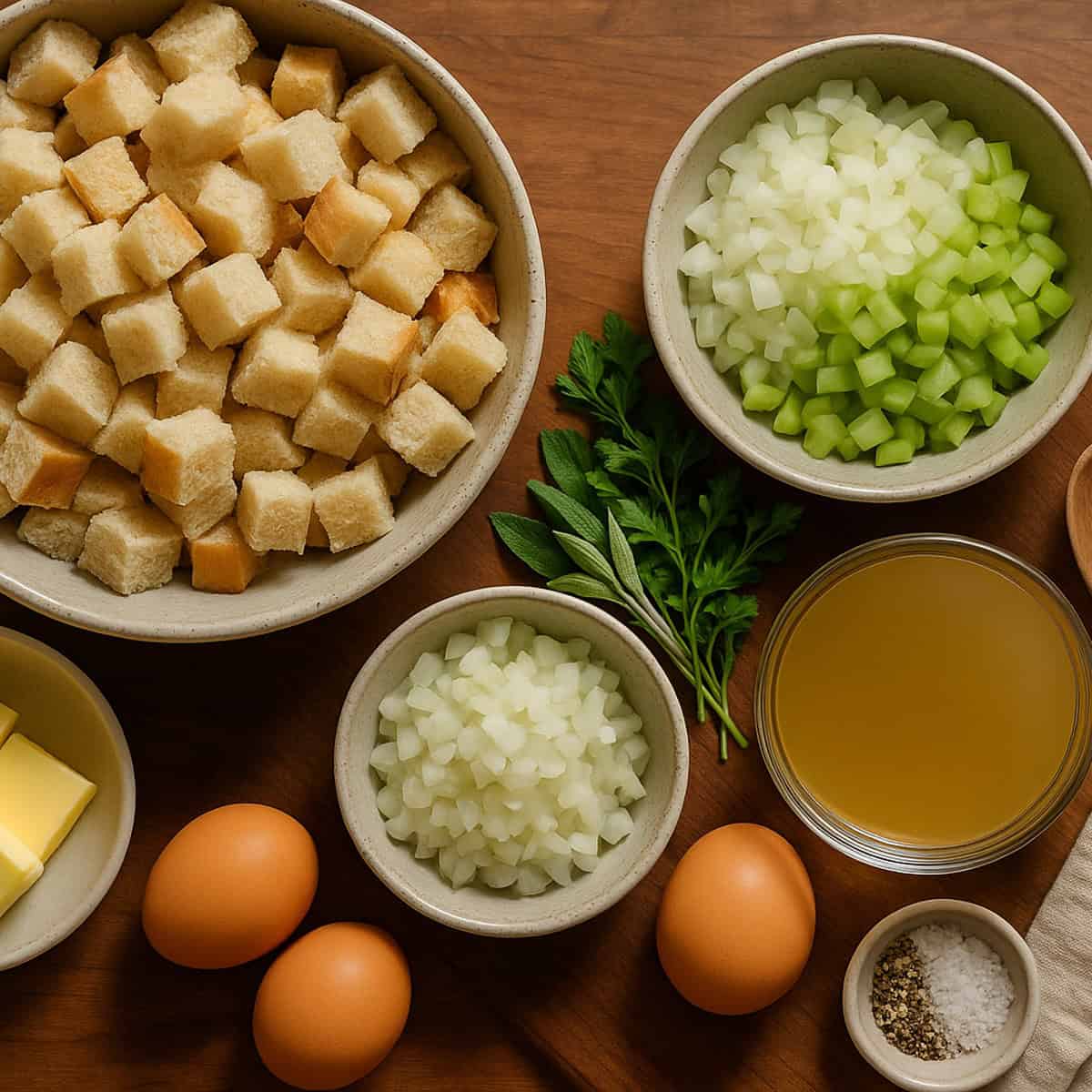
Cut the bread into ¾-inch cubes 1 to 2 days ahead and leave them out, uncovered, on sheet pans. Behind schedule? Bake them at 300°F for 15 to 20 minutes, until dry but not browned. Stale is structure. Fresh bread turns to paste the moment the stock hits it; dry bread drinks it in and keeps its shape.
Sweat the Aromatics
Melt the butter over medium heat and cook the onion and celery slowly, 6 to 8 minutes, until soft and sweet. No browning. Stir in the herbs at the end so they bloom in the butter. This is the moment the whole house starts to smell like the holiday.
Damp, Not Soupy
Warm the stock so the bread absorbs it evenly. Pour it in a little at a time and toss gently. Squeeze a handful: it should just hold together. If it sloshes, you've gone too far; add more dry bread. Stir in the egg last for a custardy, sliceable set.
Bake Shallow, Then Cover
Use a shallow dish; more surface means more golden crunch. Bake uncovered first to crisp the top, then tent loosely with foil so the center sets without the edges burning. Because it contains egg and stock, bake until the center reaches 165°F. Rest 5 minutes. Spoon, don't slice; good stuffing should have a mix of crispy edges and soft center.
Ingredient Intelligence
Stuffing begins with humble building blocks: ingredients that carry memory, aroma and chemistry.
Bread
You want bread with backbone. Day-old sourdough, a rustic white loaf or a French loaf soaks up butter and stock like a sponge and still holds its shape. The more rustic the crumb, the better the contrast between crisp crust and tender center. Avoid soft sandwich bread; it turns mushy. Pepperidge Farm unseasoned cubes are a fine shortcut.
Butter and Fat
The flavor foundation. Unsalted butter, Kerrygold or Plugrá, for richness, with an optional drizzle of turkey drippings for depth. For a dairy-free or vegan version, use a good olive oil.
Onion, Celery and Herbs
Onion and celery are the aromatic backbone of every good stuffing. Sage brings earthiness, thyme warmth and parsley brightness. Use fresh if you can; your nose will know the difference. Dried works at half the amount.
Stock and Egg
Chicken or turkey stock binds it all; use low-sodium, such as Swanson or Kitchen Basics, so you control the salt. Vegetable stock makes it vegetarian. The egg is optional but gives a custardy set; about 2 eggs per 10 cups of bread is a good ratio when you scale up.
Salt and Pepper
Don't hold back. Bread dulls seasoning, so taste the moistened mix before the egg goes in and adjust.
Variations
Once you've built the base, you can dress it up in any direction: regional, international or pure comfort.
Tuscan: Sausage, Sage and Fennel Stuffing
Use day-old crusty ciabatta in place of the bread. Brown Italian sausage (from a local Italian butcher, or Johnsonville) and caramelize sliced fennel and garlic with the aromatics, then add grated Parmigiano with the stock. Finish with rosemary and a drizzle of olive oil. Rustic, rich and built for Chianti.
Mexican: Poblano Cornbread Stuffing
Replace the bread with dried cubes of cornbread. Cook chorizo and sweet corn with the aromatics, then add cilantro and oven-roasted, peeled and chopped poblanos along with the stock.
Greek: Herbs, Olives and Lemon Stuffing
Use day-old baguette cubes. Sauté artichokes, kalamata olives, parsley, oregano and preserved lemon with the aromatics. A bright, salty contrast to rich turkey gravy; go easy on the salt, since olives and preserved lemon bring plenty.
Classic New England Apple-Sage Stuffing
Cubes of white bread, sautéed onions, celery, butter, chicken stock, diced apples and rubbed sage. The scent alone smells like home. For the coastal version, see New England Oyster Stuffing.
French: Wild Mushroom, Chestnut and Brioche Stuffing
For a special occasion, use dried brioche cubes and add sautéed wild mushrooms, roasted chestnuts, thyme and a splash of Madeira. Brioche is soft, so dry it well and add the stock a little at a time. A stuffing that feels like it came from a fine restaurant kitchen.
Make Ahead, Storage and Freezing
Dry the bread two days in advance. You can assemble the stuffing up to 24 hours ahead, cover and refrigerate it. Bake it straight from the fridge (don't leave it out to warm up) and add 10 to 15 minutes, until the center reaches 165°F. Leftovers keep in the fridge, tightly covered, for 3 to 4 days. Reheat at 350°F with a drizzle of stock until hot throughout (165°F). The oven keeps the edges crisp; the microwave makes it soft. To freeze, cool completely and pack in freezer-safe containers for up to 3 months. Reheat from frozen, covered, at 350°F until hot throughout.
What to Serve with Thanksgiving Stuffing
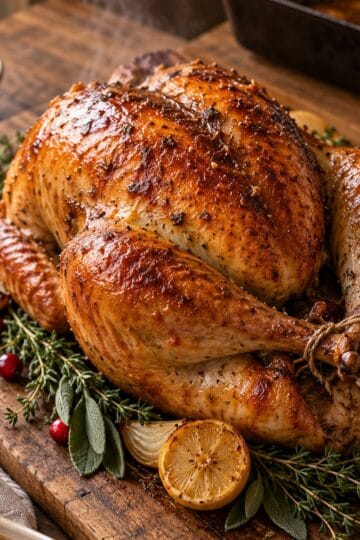
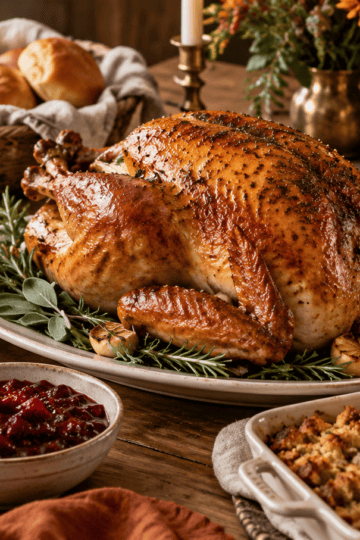
- Dry Brine Turkey
- Green Bean Casserole or Green Beans Almondine
- Honey Roasted Rainbow Carrots
- Old-Fashioned Southern Cornbread
- The full plan: Thanksgiving Menu and Italian-American Thanksgiving
What to Pour with Thanksgiving Stuffing
Sage, thyme and butter love an earthy red, so Pinot Noir is the natural match for the classic version. Pour a Chianti Classico with the Tuscan sausage and fennel, a Mexican lager or a fruity Grenache with the poblano cornbread, and a crisp Assyrtiko or Sauvignon Blanc with the Greek olives and lemon. The apple-sage stuffing loves a dry Riesling, and the French mushroom and chestnut version calls for a red Burgundy. For every dish on the table, see What Wine to Serve with Thanksgiving Dinner on Food and Wine Discoveries.
Thanksgiving Stuffing FAQ
What's the difference between stuffing and dressing?
Technically, stuffing goes inside the bird and dressing is baked separately. In practice, most cooks bake it in a dish and use whichever name their family uses. More in Dressing vs. Stuffing.
Can I make stuffing ahead of time?
Yes. Assemble it up to 24 hours ahead, cover and refrigerate. Bake it straight from the fridge, adding 10 to 15 minutes, until the center reaches 165°F.
What kind of bread is best for stuffing?
Sturdy, day-old bread: sourdough, a rustic white loaf, a French loaf or cornbread. Avoid soft sandwich bread, which turns mushy.
How moist should stuffing be before baking?
Damp, not soupy. A squeezed handful should just hold together. Add warm stock gradually and stop when you get there.
Can I stuff the turkey?
You can, but the stuffing in the center must reach 165°F, and by then the breast meat is often overcooked. Baking it separately is safer and gives you crispy edges. Drizzle with turkey drippings before serving for the same flavor.
How do I get crispy edges on stuffing?
Use a shallow pan and bake uncovered for the first part of the bake, then tent with foil so the inside stays soft.
Can I freeze stuffing?
Yes. Cool baked stuffing completely and freeze in airtight containers for up to 3 months. Reheat covered at 350°F until hot throughout.

Classic Stuffing Base

Equipment
- Serrated bread knife
- Rimmed sheet pan
- 8 × 8-inch baking dish
Ingredients
- 6 cups bread cubes day-old, about ½ of a rustic loaf, sourdough or white
- 4 tablespoon unsalted butter
- ½ cup onion finely chopped
- ½ cup celery 1 to 2 stalks, chopped
- 1 teaspoon fresh thyme leaves or ½ teaspoon dried
- 1 teaspoon fresh sage chopped or ½ teaspoon dried rubbed sage
- ¼ teaspoon black pepper
- ¾ teaspoon kosher salt
- 1 cup chicken stock warm
- 1 egg lightly beaten
- 1 tablespoon parsley optional, chopped, for brightness
Instructions
Prep the bread
- Cut the bread: Cut bread into 6 cups of ¾-inch cubes 1 to 2 days before cooking.
- Dry the bread: Leave uncovered to dry, or bake in a 300°F oven for 15 to 20 minutes, until dry but not browned.
Sauté the aromatics
- Soften the vegetables: In a large skillet, melt 4 tablespoons unsalted butter over medium heat. Add ½ cup onion and ½ cup celery, cooking 6 to 8 minutes, until softened and fragrant.
- Season: Stir in 1 teaspoon fresh thyme (or ½ teaspoon dried), 1 teaspoon fresh sage (or ½ teaspoon dried), ¾ teaspoon kosher salt, and ¼ teaspoon black pepper.
Combine and moisten
- Toss with butter: In a large bowl, toss bread cubes with the butter mixture.
- Add the stock: Pour in 1 cup warm chicken stock gradually, tossing gently until the bread feels evenly damp but not soggy.
- Add egg and parsley: Stir in 1 beaten egg and 1 tablespoon parsley.
Bake
- Fill the dish: Transfer to a greased 8×8-inch baking dish.
- Bake uncovered: Bake uncovered at 375°F for 25 minutes.
- Finish covered: Cover loosely with foil and bake another 15 to 20 minutes, until golden on top and custardy beneath.
Serve
- Rest and serve: Let rest 5 minutes before serving. Spoon, don't slice. Good stuffing should have a mix of crispy edges and soft center.
Notes
Nutrition
Made this? Leave a star rating and a comment below: which variation did your family pick? I read every comment.

Comments
No Comments