
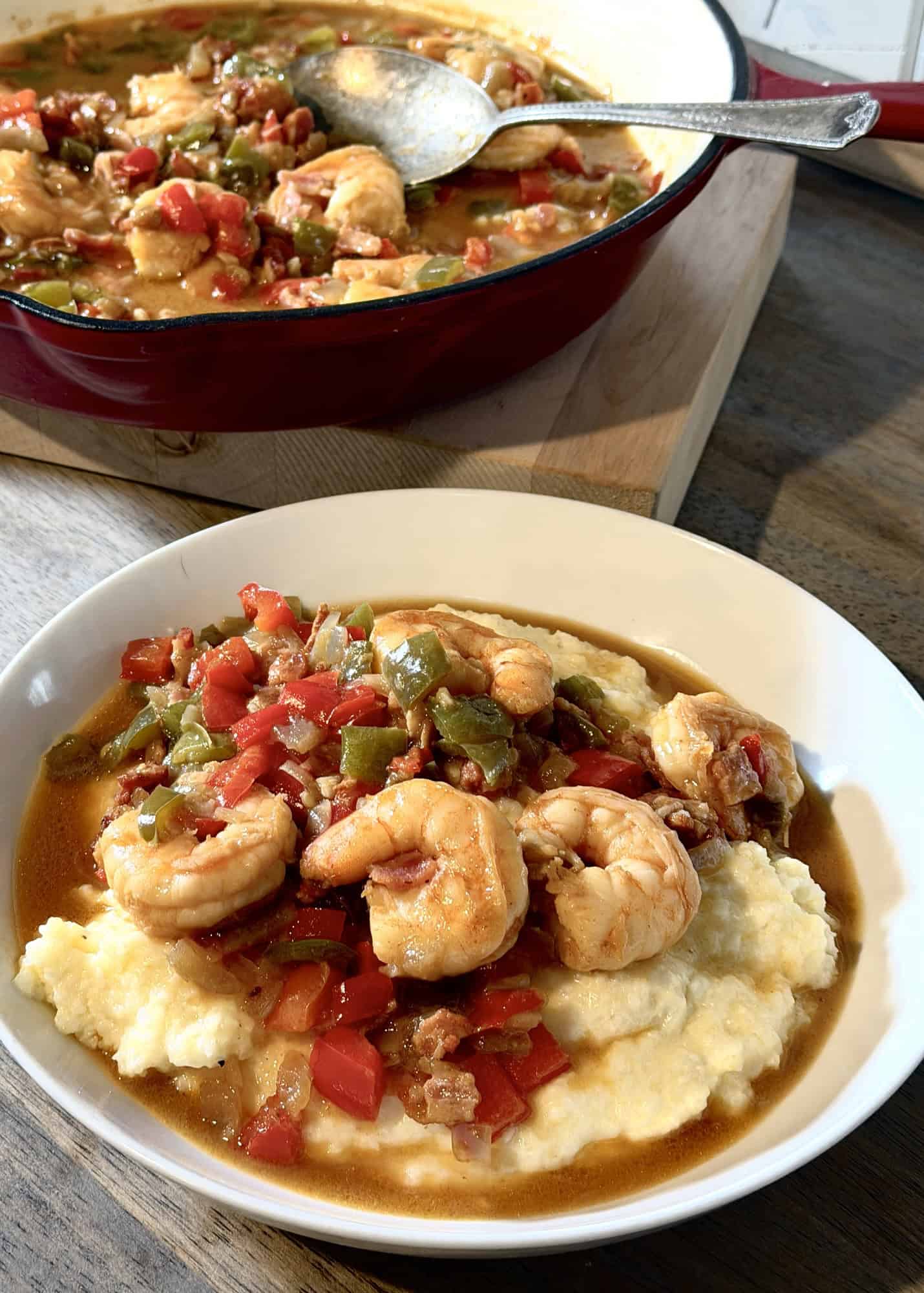
This is Lowcountry technique, The grits are soaked before cooking for a smoother texture, then slowly simmered so they stay creamy without cream. The shrimp are quickly seared in a hot cast iron skillet, removed, and returned to a light pan sauce built from the browned bits in the skillet.
Why This Dish Matters
Shrimp and grits began as a Lowcountry breakfast — fresh shrimp served over simple corn grits. Over time, it evolved into a dinner staple enriched with bacon and aromatics. What separates a balanced version from a heavy one is restraint: properly hydrated grits, controlled heat, and a pan sauce built in layers.
Milk and butter provide body without turning the dish into a cream-heavy casserole. The result is structured, corn-forward, and built to hold its place on a Southern table.
What You’ll Be Doing
You’ll soak and gently simmer stone-ground grits in milk, then build a bacon-based pan sauce with onions, peppers, garlic, and quickly seared shrimp. The dish comes together in layers, finishing with butter for balance and structure.
Technique Intelligence
Soaking the Grits
Hydrating stone-ground grits before cooking improves texture and reduces cook time. It creates creaminess naturally without relying on cream. Our prefered choice is Bob's Red Mill Stone Ground Grits
Milk Instead of Cream
Milk enriches while preserving the clean flavor of the corn. Butter finishes the grits and adds gloss without heaviness.
Cooking Shrimp Properly
Shrimp cook fast — about 60–90 seconds per side. Once opaque and lightly curled, they are done. Overcooking makes them rubbery.
Building the Pan Sauce
Render bacon first. Slowly sauté onions and peppers until soft. Add garlic briefly. Deglaze with stock, reduce slightly, then return shrimp and finish with butter. Each layer builds depth.
Ingredient Intelligence
Stone-Ground Grits
Coarser than quick grits, they retain corn flavor and structure. Soaking improves texture and prevents graininess.
Whole Milk
Adds body while keeping the dish balanced and savory.
Butter
Used in both grits and sauce to round acidity and add sheen.
Bacon
Provides fat, smoke, and depth. The rendered fat becomes the base of the sauce.
Shrimp
Large shrimp sear better and remain tender. Pat dry before cooking to ensure browning.
Onion, Bell Pepper & Garlic
Finely diced and slowly sautéed so they melt into the sauce rather than sit on top.
Suggested Equipment
Heavy-Bottomed Saucepan
For gently simmering grits without scorching.
Large Cast Iron or Stainless Steel Skillet
For rendering bacon and searing shrimp.
Fine Mesh Strainer
To rinse and drain soaked grits.
Whisk or Wooden Spoon
Prevents clumping while grits simmer.
Sharp Chef’s Knife & Cutting Board
A fine dice ensures aromatics integrate smoothly.
Fish Spatula (Optional)
Helps flip shrimp cleanly.
Table Itinerary
Shrimp and grits pairs well with other structured Southern dishes:
• Old-Fashioned Southern Cornbread
• Collard Greens or Sautéed Greens
• Vinegar Slaw
• Roasted Okra
• Sweet Tea or a crisp dry white wine
Keep the grits slightly loose when plating — they firm as they cool.
Chef Notes
• Soak grits at least 30 minutes; overnight is even better.
• Keep heat low and stir regularly to prevent scorching.
• Dice vegetables small so they integrate into the sauce.
• If grits thicken too much, whisk in warm milk before serving.
• Cook shrimp last — they should never sit long in heat.
Storage
Shrimp and grits is best served immediately.
Refrigeration: Store up to 2 days in an airtight container.
Reheating:
Reheat grits gently with a splash of milk. Warm shrimp briefly over low heat to avoid overcooking.
Freezing is not recommended due to texture changes.
FREQUENTLY ASKED QUESTIONS — SHRIMP & GRITS
What type of grits are best for shrimp and grits?
Stone-ground grits produce the best flavor and texture because they retain more of the corn’s natural oils and structure. Quick grits cook faster but tend to be smoother and less complex. Instant grits are generally not recommended for this dish.
Can I substitute polenta for grits?
Yes. Polenta and grits are both ground corn, so the cooking method is the same. Polenta produces a smoother, creamier texture and a slightly sweeter flavor, while traditional stone-ground grits are coarser and more savory. The dish will be delicious but less traditionally Southern in character. For best results, use coarse or medium-ground polenta, cook it in stock rather than water, and season generously.
What size shrimp should I use?
Large or extra-large shrimp (16–25 count per pound) provide the best balance of flavor and texture. Smaller shrimp can overcook quickly and become tough.
Should shrimp be peeled and deveined?
Yes. Remove the shells and the digestive vein for the cleanest texture and flavor. Tails may be left on for presentation, but removing them makes the dish easier to eat.
How do I keep shrimp from becoming rubbery?
Shrimp cook very quickly. Sauté just until they turn pink and opaque, usually 1–3 minutes per side depending on size. Remove from heat immediately to prevent overcooking.
Why are my grits lumpy?
Lumps form when dry grits are added too quickly to hot liquid. Add them gradually while whisking continuously, then cook gently until fully hydrated.
Why are my grits bland?
Grits require generous seasoning. Salt the cooking liquid properly and finish with butter, cheese, or cream for richness. Undersalted grits taste flat regardless of toppings.
What kind of cheese works best in grits?
Sharp cheddar is traditional, but other melting cheeses such as Monterey Jack, Gouda, or Parmesan can also be used depending on the style of the dish.
Can I make shrimp and grits ahead of time?
Grits can be made ahead and gently reheated with additional liquid to restore creaminess. Shrimp should be cooked just before serving for the best texture.
Why did my grits become stiff after sitting?
As grits cool, starches firm up and absorb liquid. Reheat slowly while stirring in water, milk, or stock to loosen them.
Is shrimp and grits spicy?
Traditionally, the dish is savory rather than spicy, though many modern versions include Cajun seasoning, hot sauce, or peppers for added heat.
What is the traditional sauce for shrimp and grits?
Classic versions often include a savory pan sauce made with bacon fat, garlic, and stock. Regional variations may add cream, tomatoes, or spices.
Can I use frozen shrimp?
Yes. Thaw completely and pat dry before cooking to prevent excess moisture and ensure proper browning.
What should I serve with shrimp and grits?
The dish is typically served as a complete meal, but a light salad or sautéed greens can provide balance.
Why does restaurant shrimp and grits taste better than mine?
Restaurants build flavor in layers — properly seasoned grits, browned aromatics in fat, stock instead of water, and precisely cooked shrimp. Small improvements at each step produce a noticeably richer final dish.
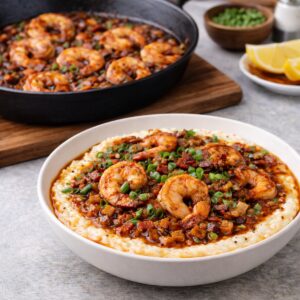
Southern Shrimp and Grits

Equipment
- Equipment
- Cast iron skillet
- Medium heavy-bottom saucepan
- Whisk
- Chef’s knife
- Measuring cups and spoons
Ingredients
Ingredients
For the Grits
- 1 cup stone-ground grits
- 3 cups whole milk
- 1 cup water
- 3 tablespoons unsalted butter
- 1 teaspoon kosher salt plus more to taste
For the Shrimp
- 1 pound large shrimp peeled and deveined
- 4 slices thick-cut bacon diced
- 1 small yellow onion finely diced
- 1 red bell pepper finely diced
- 1 green bell pepper finely diced
- 2 cloves garlic minced
- ½ cup chicken stock or grit cooking liquid
- 1 tablespoon fresh lemon juice
- ½ teaspoon black pepper
- Kosher salt to taste
Instructions
Instructions
Prepare the Grits
- Rinse 1 cup stone-ground grits under cold water. Soak in fresh water for 30–45 minutes, then drain.
- In a saucepan, bring 3 cups milk and 1 cup water to a gentle simmer.
- Whisk in the drained grits and add 1 teaspoon kosher salt.
- Reduce heat to low and simmer, stirring frequently, for 25–30 minutes until creamy and tender.
- Stir in 3 tablespoons butter and adjust salt. Keep warm on very low heat.
Build the Shrimp and Sauce
- In a cast iron skillet over medium heat, cook 4 slices diced bacon until crisp. Remove and set aside, leaving the fat in the pan.
- Lower heat slightly and add diced onion and bell peppers. Cook slowly for 15–20 minutes until very soft and onions are translusent.
- Add 2 cloves minced garlic and cook 30 seconds until fragrant.
- Increase heat to medium-high. Add shrimp in a single layer. 1–2 minutes per side until just opaque and lightly caramelized. Remove shrimp when done, set a side.
- Deglaze the skillet with 1 cup chicken stock (or grit cooking liquid). Simmer 10-15 min. minutes until slightly reduced.
- Return shrimp and bacon to the pan. Add 1 tablespoon lemon juice and ½ teaspoon black pepper. Adjust salt.
To Serve
- Spoon creamy grits into shallow bowls. Top with shrimp and pepper pan sauce. Serve immediately.
Notes
• Do not overcook shrimp — remove as soon as opaque.
• The peppers should soften and melt, not remain crisp. Storage Refrigerate separately for up to 3 days.
Reheat grits gently with a splash of milk to loosen.

Comments
No Comments