
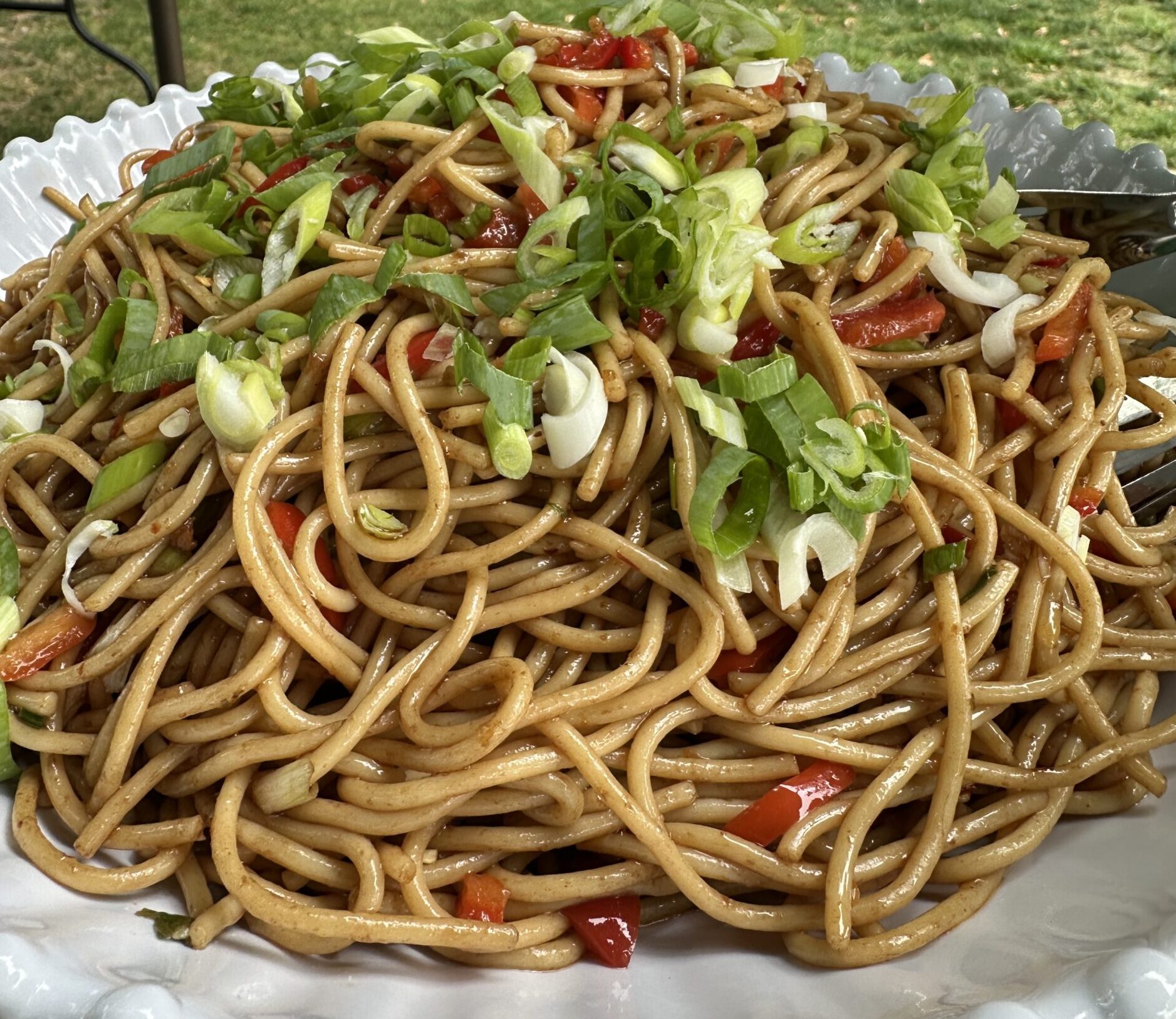
Cold sesame noodles have been appearing on tables across China in different forms for generations — street vendors, noodle shops, family meals, and regional traditions built around the idea that simple ingredients handled properly can become something memorable. Soy, vinegar, sesame, and noodles don't sound like much on paper. But food has never really been about paper. Somewhere along the way people figured out that a bowl of chilled noodles, balanced between salt, aroma, acidity, and heat, had a strange habit of becoming the dish everyone kept reaching back for.
Cold sesame noodles only work when the details are right. Cook the noodles properly — enough bite to hold their shape, not a soft tangled mess. Balance matters too: light soy for seasoning, dark soy for depth, black vinegar for that unmistakable fermented edge, sesame oil for aroma, and just enough sambal to wake things up without hijacking the bowl. Simple ingredients have nowhere to hide, so every one of them has to pull its weight.
At home, this becomes one of those dishes that quietly settles into your rotation. The kind you make on a Sunday afternoon, stealing a forkful while standing at the kitchen counter because the sesame catches you first, then the soy, then that little lift of vinegar at the end. It somehow feels light and comforting at the same time — the rare bowl that tastes just as right for lunch tomorrow as it does for dinner tonight.
Technique Intelligence
Cooking noodles to al dente
Cold noodle salads begin with texture. Noodles should remain slightly firm because they continue softening after cooking and while absorbing dressing. Overcooked noodles lose structure and tend to clump together once chilled. Cook until tender with a slight chew remaining, then rinse briefly under cold water to stop carryover cooking and remove excess surface starch.
Julienne cuts create balance
Thin julienned red peppers and sliced scallions are doing more than adding color. Smaller uniform cuts distribute throughout the noodles and create texture in every bite rather than leaving large pieces sitting in isolated pockets. Similar size and shape also help ingredients mix evenly throughout salads and noodle dishes.
Toasting sesame seeds
Toasting changes sesame dramatically. Raw sesame seeds taste mild and almost disappear into the dish, while toasted sesame develops warmer nutty flavors and stronger aroma. A dry pan over medium heat for a few minutes is usually enough. Once fragrant and lightly golden, remove immediately since sesame can move from toasted to burnt quickly.
Emulsifying the dressing
Oil and vinegar naturally separate. Whisking soy sauce, vinegars, sambal, and oils together creates a temporary emulsion that helps distribute flavor evenly throughout the noodles. Instead of isolated pockets of oil or vinegar, the dressing lightly coats each strand and creates a more balanced bite.
Ingredient Intelligence
Chinese Black Vinegar
Chinese black vinegar has a softer personality than the bright sharpness many Western vinegars bring. Slightly fermented with deeper almost malty notes, it sits quietly underneath the noodles and gives the dressing its depth. It is often the flavor people notice without realizing exactly what they are tasting. I keep Gold Plum or Kong Yen in the pantry.
Light & Dark Soy Sauce
Light and dark soy sauce may look similar sitting beside each other on the shelf, but they behave very differently. Light soy provides the primary seasoning while dark soy contributes deeper flavor and rich color. Together they create balance in a way one bottle alone rarely can. I usually reach for Lee Kum Kee Premium Light Soy and Pearl River Bridge Dark Soy.
Toasted Sesame Oil
Sesame oil announces itself before the fork ever reaches your mouth. Warm, nutty, and intensely aromatic, it behaves more like seasoning than cooking oil. Too little disappears, too much takes over the room. For a clean sesame flavor I usually keep Kadoya or La Tourangelle Toasted Sesame Oil nearby.
Sambal
Sambal brings a cleaner style of heat than many chili sauces. It sits in the background, creating warmth that slowly builds rather than immediately taking control of the bowl. Huy Fong Sambal Oelek and Lee Kum Kee Chili Garlic Sauce both work beautifully.
Scallions & Red Pepper
Scallions and red peppers keep the noodles from becoming one note. Scallions bring freshness and mild onion flavor while thin strips of red pepper contribute sweetness and crunch. Cold noodle dishes need ingredients that keep every bite moving.
What to Serve with Cold Asian Sesame Noodle Salad
- Pork dumplings
- Korean BBQ chicken
- Teriyaki salmon
- Char siu pork
- Grilled shrimp
- Asian cucumber salad
Cold Asian Sesame Noodle Salad

Equipment
- Colander
- Large mixing bowl
- Small bowl
- Whisk
- Dry sauté pan
Ingredients
Noodles
- 1 pound spaghetti lo mein noodles, or Chinese wheat noodles
- 1 tablespoon kosher salt for cooking water
- 1 tablespoon canola oil
Salad Mix Ins
- 1 large red bell pepper julienned
- 6 scallions thinly sliced on a bias
- 3 tablespoons toasted sesame seeds
Sesame Dressing
- ¼ cup light soy sauce
- ¼ cup dark soy sauce
- 2 tablespoons Chinese black vinegar
- 1 tablespoon rice vinegar
- ¼ cup canola oil
- 2 tablespoons toasted sesame oil
- 1 –2 teaspoons sambal oelek
- ¼ teaspoon white pepper
Instructions
- Bring a large pot of water to a boil and season with 1 tablespoon kosher salt.
- Cook 1 pound noodles according to package directions until al dente, approximately 7–9 minutes, leaving a slight chew.
- Drain the noodles and rinse briefly under cold water to stop cooking and remove excess surface starch.
- Toss the noodles with 1 tablespoon canola oil and allow them to cool completely.
- Place a dry sauté pan over medium heat and toast 3 tablespoons sesame seeds for 2–3 minutes, stirring frequently, until lightly golden and fragrant. Remove immediately.
- In a mixing bowl whisk together ¼ cup light soy sauce, ¼ cup dark soy sauce, 2 tablespoons Chinese black vinegar, 1 tablespoon rice vinegar, ¼ cup canola oil, 2 tablespoons toasted sesame oil, 1–2 teaspoons sambal oelek, and ¼ teaspoon white pepper until lightly emulsified.
- Add cooled noodles to a large mixing bowl with 1 julienned red bell pepper and 6 sliced scallions.
- Pour dressing over the noodles and toss thoroughly until evenly coated.
- Fold in 2 tablespoons toasted sesame seeds, reserving the remaining 1 tablespoon for garnish.
- Refrigerate for 30 minutes before serving and garnish with reserved sesame seeds.
Notes
Dressing may tighten after refrigeration; toss lightly before serving.
Add grilled chicken, shrimp, or tofu for a complete meal.
The flavor improves after resting for 30–60 minutes.

Comments
No Comments